Friday, 23 February 2024

Cannabis, caffeine and chocolate -- BAT's expanding footprint in Canada

BAT presentation 2021 showing
three areas of focus
Four years have now passed since British American Tobacco revamped its branding and proclaimed a "better tomorrow" business plan focused on new nicotine delivery systems, and three years since it announced that it was going "beyond nicotine" to sell other psychoactive substances ("On the go wellbeing and stimulation").

The release earlier this month of BAT's most recent annual report provides an update these activities. This post reports on those which  have particular relevance to Canada.

BAT adds cannabis to its business plan

BAT has added a fourth product category of activity. To the three areas identified in 2021 (Tobacco, New Nicotine and Beyond nicotine wellbeing and stimulation) it has now added a fourth drug - cannabis - to its strategy for "Quality Growth". 

The company notes that revenues from the global legal market for cannabis have doubled from £5.2 billion in 2019 to £11.1 billion in 2022. In this year's annual report the company boasts that cannabis is "an exciting potential category for the future".

BAT Combined Annual and Sustainability Report for 2023

Coming soon: "disruptive inhalation formats" for cannabis 

Canada is a proving ground for BAT's entry into cannabis. The tobacco giant now owns 45% of Organigram. Based in New Brunswick, Organigram is one of the larger cannabis manufacturers in Canada and sell a range of combustible, edible and vaporized products.

Organigram reports that its partnership with BAT is aimed at "innovative technologies in the edible, vape and beverage categories in addition to new disruptive inhalation formats"  BAT reports that its collaboration with Organigram "is in late-stage development of a suite of emulsions, novel vapour formulations, flavour innovations and packaging solutions which are soon to be commercialised by Organigram in the Canadian market."

Organigram Investor Presentation 2024

Water soluble cannabis for beverages and cosmetics

Organigram is not the only cannabis-related investment of BAT in Canada. Through its venture capital arm, BtomorrowVentures, BAT is funding the development of water-soluble cannabis by the Vancouver-based company Trait.  This technology is promoted as a way to infuse cosmetics and to increase the dosage of cannabinoids in beverages. In October 2023 Traitbio posted:

“The collaboration between Btomorrow Ventures and Gotham Green Partners, in particular, has been a powerful catalyst in advancing Trait’s development and commercialization activities,” says Hanny Kanafani, PhD, President and COO at Trait, “thereby enabling the launch of unique first-generation cannabinoids which, when added to waters/beverages, maintain beverage clarity and do not impart turbidity, even when added at competitive dosages.

“When added into cosmetic applications, Trait’s water-soluble materials do not require additives typically used in skincare products to maintain quality; and opens the door for unique and differentiated infused cosmetic applications.”

British American Tobacco and the candy counter

Awake chocolate manufactures caffeinated chocolate under the eponymous brand name ("each bite .... contains as much caffeine as a half a cup of joe!". It also makes chocolate designed to help people relax ("mello milk and dark chocolate bites are the perfect way to wind down. Infused with a natural botanical blend of lemon balm and L-Theanine, our delicious chocolate promotes relaxation without drowsiness.")

The company is privately owned and is based in Mississauga. British American Tobacco first invested in Awake in 2021 and increased its financing again in 2023

Although Mello 'relaxing chocolate' is not currently available, the caffeinated product Awake can be found in convenience and other stores across Canada.


Tuesday, 20 February 2024

Health groups call on Federal government to deliver on its commitment to protect kids against nicotine addiction

This post includes a copy of an advertisement placed in this Monday's edition of the Hill Times by several Canadian health organizations, as well as the accompanying press release issued by the Quebec Coalition on Tobacco Control yesterday.


Montreal, February 19, 2024 – Leading health organizations concerned about the health and wellbeing of youth in Canada have united to publish a full-page ad today in The Hill Times to draw Ottawa lawmakers’ attention to the urgent need to intervene to protect minors against nicotine addiction.

The ad is signed by Action on Smoking & Health, the Canadian Cancer Society, the Canadian Lung Association, the Quebec Coalition for Tobacco Control, Heart & Stroke and Physicians for a Smoke-Free Canada.

It highlights how flavours play a key role in attracting kids to nicotine products and calls on the federal government to ban flavours in vaping products, including mint and menthol (tobacco flavour would be allowed). Banning flavours has been on the government’s agenda since the publication of draft regulations in June 2021, although no concrete action has materialized since then.

While the government’s existing proposal would exempt mint/menthol, health groups have argued that a complete ban on non-tobacco flavours is required to protect young people from nicotine addiction, as mint/menthol is the second-most popular flavour amongst youth and young adults. A comprehensive ban would be consistent with developments in a growing number of jurisdictions, including Finland, Hungary, Lithuania, Netherlands, Norway, five U.S. states (California, Massachusetts, New Jersey, New York, and Rhode Island, as well as D.C.) and six Canadian provinces and territories.

The ad also calls for swift action to protect minors against the sale and promotion of nicotine pouches, namely by making them a prescription-only product. Under the current federal rules, nicotine pouches authorized under the Natural Health Products Regulation can be legally sold to minors in convenience stores and promoted on television, billboards and social media, including by means of lifestyle advertising.

In fact, it was Imperial Tobacco’s lifestyle promotion in favour of their new “Zonnic” pouches that pushed health groups to sound the alarm last fall. Making nicotine pouches available on a prescription-only basis would give time to both federal and provincial governments to establish a proper regulatory framework.

So far, only British Columbia and Quebec have taken steps to address this issue, by requiring consumers to go through a pharmacist to purchase these products.

Quotes:

“Several additional options are available to the Health Minister, like temporarily suspending the sale of nicotine products, which would also allow federal, provincial and territorial authorities to strengthen relevant laws and regulations. For example, nicotine pouches could be subject to many of same provisions regarding promotion that apply to tobacco and vaping products,” explains Cynthia Callard, Executive Director of Physicians for a Smoke-Free Canada.

“Nicotine is a highly addictive drug, and there needs to be adequate controls before a nicotine product is allowed on the market,” says Sarah Butson, Senior Director, Public Affairs at the Canadian Lung Association. “Nicotine pouches are popular with youth in other countries – a trend not observed with other forms of smoking cessation products. We are concerned about a rise in popularity by Canadian youth and the resulting early exposure to nicotine.”

“Nicotine gum was initially only sold by prescription in Canada, and only later on was a non-prescription approach allowed,” says Manuel Arango, Director of Policy & Advocacy at Heart & Stroke. “Using that same precautionary approach for a new type of nicotine product is totally reasonable and could be done easily and quickly.”

“This is the first time in more than 100 years that it is legal for a nicotine product from a tobacco company to be sold to minors in Canada,” says Rob Cunningham, Senior Policy Analyst, Canadian Cancer Society. “Tobacco companies cannot be trusted. It is essential that the federal Health Minister take action on an urgent basis.”

“Imperial Tobacco can claim all it wants that its pouches are intended for adult smokers who want to quit, but unlike other manufacturers of nicotine replacement therapies (NRT), this company deliberately chose to distribute its product through convenience stores and promote them with lifestyle messaging and images of young adults,” explains Flory Doucas, Co-Director and Spokesperson of the Quebec Coalition for Tobacco Control.

“The Minister said last Monday that we can expect an announcement regarding nicotine pouches ‘in the coming days’. We look forward to seeing what the Minister plans to do. We hope that the government will be consistent in protecting kids from nicotine addiction and will rapidly move to ban all flavours in vaping products. Time is of the essence when it comes to kids getting hocked on nicotine,” said Les Hagen, Executive Director of ASH Canada.

Thursday, 8 February 2024

Newly released JUUL documents show the company felt welcomed by Canadian and UK health regulators

At the end of January the first release of 4 million internal documents from JUUL were made public on the UCSF Industry Documents Library. The disclosure of these documents was a condition of the 2021 settlement between the State of North Carolina. The documents date from 2015 to 2019. 

Among the 280,000 documents contained in this release are some which show that  JUUL felt its products were not only acceptable to regulators, but were initially welcomed by them. 

CANADA

Vaping products were legalized in Canada in May 2018. A few weeks later (August 13, 2018) JUUL officials met with representatives of Health Canada. Their notes of this meeting suggest some mutual enthusiasm for the sale of JUUL products in Canada: "We had a very positive meeting with Health Canada this morning.... The main takeaway was that they are excited to have new entrants into the market for nicotine-containing e-cigarettes that are compliant with the regulatory framework that they have put in place."

The JUUL meeting report says that government officials suggested that the company work reports that it was suggested to them that they "work with credible academics in Canada to generate research on safety and health impact of our products." 

Health Canada's report of the meeting is somewhat different. (The department makes public notes from its meeting with tobacco and vaping companies). On the question of the the government's receptiveness to the launch of JUUL, their notes record "JUUL asked if HC had any concerns with its upcoming market entry. HC responded that JUUL would need to ensure compliance with the Tobacco and Vaping Products Act and the Canada Consumer Product Safety Act."

UNITED KINGDOM

During the previous summer (June 2017) JUUL went out for "an excellent dinner" with the tobacco control program lead at Public Health England (Martin Dockrell) and the chief executive of ASH UK (Deborah Arnott).  

This was a year before JUUL was launched in the UK , and the company was trying to figure out its regulatory approach. The meeting notes show that two avenues were considered -- one where the device would be licensed by the Medicines and Healthcare products Regulatory Agency (MHRA) - a process that JUUL was cautioned could take a year or two. 

Their meeting notes report that the Public Health England representative suggested an alternative and faster route. If they marketed JUUL as a "novel tobacco product", there was no need to seek pre-approval. "We hadn't considered this pathway till Martin suggested it," the notes record. The memo concludes in bold that "This previously unconsidered approach has the potential to be very attractive."


A record of this meeting prepared by Public Health England has not been located. 

Saturday, 3 February 2024

Varia: Newly-posted information on Government of Canada web-sites.

This post identifies information recently posted on some federal government websites that is relevant to tobacco control.

Compared with cannabis and alcohol, Canadians continue to think smoking and vaping are less acceptable and more risky.

On January 12, Health Canada released the results of the most recent Cannabis survey. This is the sixth release of the annual survey, which is one of the few Canadian surveillance tools which looks at the social acceptability of using legal recreational drugs by mode of delivery. 

Of the six behaviours (oral cannabis use, smoked cannabis use, vaped cannabis, alcohol drinking, vaping nicotine and smoking tobacco ), smoked tobacco continues to be the least socially acceptable behaviour, followed by vaping. 


This survey also asks about perceived risks of product use. Again, tobacco use and vaping are perceived to be the most risky. There have been statistically significant shifts in perceptions of risk for both vaping (higher then lower) and tobacco (lower) when compared to 6 years ago.


The survey also found that using dried leaf (smoking) cannabis remains the most popular form of delivery (60% of past-year users), but that this has fallen in recent years, with increasing use of edibles and vaping. Among daily cannabis users, dried leaf is the most common form of use (31% of dried leaf users are daily users). The combined use of tobacco and cannabis has fallen slightly since 2018 (from 30% to 24%). 

Twice as many post-secondary students are vaping as smoking.

The results of the 2020-2021 Canadian Postsecondary Education Alcohol and Drug Use Survey (CPADS) were posted on the federal government website in January. This survey engaged 31,643 Canadian students aged 17 to 25 enrolled in any program at a university, college or CEGEP. 

Alcohol remains the most frequent substance consumed (two-thirds of students in the past month), with Cannabis coming second (29% past month use, 8% daily use), vaping third (17% past month use, 8% daily use) followed by smoking (8% past month use, 2% daily use). Gender differences in vaping and smoking were not observed.


New trademark registrations may signal new products

In January, Corporations Canada reported new trademark filings by Philip Morris for:
* vaping products (VEEV CLEAR TASTE, VEEV NOW ULTRA V);
* PR campaigns  (STAY CURIOUS)

From these it seems reasonable to assume that:
* Philip Morris is following the path laid by British American Tobacco in seeking authorization to market their Zyn/Velo nicotine pouches in Canada, but to use a different brand name (Advance/Zonnic) in doing so.
* PMI is introducing a fourth version of its vaping product to Canada (in addition to the capsule Veev One, and the disposables Veev NOW 2ml and Veev NOW 5 ml)


Changing surveillance tools 

Although it has not made an announcement to this effect, Health Canada has terminated its support for the Canadian Tobacco and Nicotine Survey, making the winter of 2022-23 the last period in which this survey was conducted. 

The 2024 questionnaire of the Canadian Community Health Survey contains 8 questions on vaping, and the Rapid Response Module (a smaller sample component of the survey) has one question on quit intention, one question on "other" tobacco products and two questions on nicotine pouches. These were released in late December 2023. 

In January, Health Canada issued an Advanced Contract Award Notice for a $700,000 contract with the University of Waterloo for a "Evaluating and understanding cigarette smoking, nicotine vaping, and policies on both products among adults in Canada in the international context" The contract appears to be for an additional wave of the ITC study of smokers and former smokers, with increased sampling in each province.

I Quit for Me

Health Canada has updated and re-branded its Quit4Life resources. The new resources became available on the web-site in January. The website also asks young people to answer a long survey on smoking and vaping and their feelings of addiction (including 8 options for gender!). Those who participate are invited to contact Health Canada for a follow-up survey.

Administrative modifications to the federal Vaping Products Tax

Canada has imposed a tax on vaping liquids at retail since January 2023 and a number of provinces have indicated that they will be partnering in this tax (with a rumoured start date of July 2024).

Amendments to the Excise Act on how this tax will be administered are the subject of a bill currently before Parliament

In January the Finance Department provided an explanation on the impact of these changes. (They shift the point at which manufacturers must remit taxes.) 

Monday, 15 January 2024

Updated data sheets on tobacco taxes and cigarette consumption in Canada

This post provides links to updated data sheets on tobacco tax revenues, industry earnings, cigarette sales and smoking rates. Some highlights are provided below.  

Appreciation goes to those working in the government agencies which have collected this information and made it available.
 
1The average Canadian cigarette smoker provided governments with $1,862 in tobacco-specific taxes in 2022

Almost all (90%) of the federal tobacco tax is collected on manufactured cigarettes, with taxes on cigars and loose tobacco totalling about 340 million. Provincial governments do not provide detail on revenues from different types of tobacco. 

These revenues represents an average of $1,685 in tobacco taxes collected from each of Canada’s 3.8 million cigarette smokers – with the federal government reporting $779 in tobacco tax revenue per smoker and provincial governments reporting between $616 and $1,311 per smoker during the year. 

Almost two-thirds (63%) of Canada’s smokers live in Quebec and Ontario, where where tobacco taxes are lowest.


Related data sheets: 
2) Total tobacco tax revenues in Canada fell by 10% year over  year.

Overall, tobacco tax revenues across Canada fell by 10% in 2022-2023 compared with the previous fiscal year. 

Federal revenues from tobacco excise taxes fell by $217 million, from $3.18 billion to $2.96 billion (-7%). All of the provinces experienced a decline in tobacco tax revenues, from a provincial total of $3.93 billion in 2021-22 to $3.4 billion in 2022-2023. The drop was greatest in British Columbia (-25%), Newfoundland (-23%), Alberta (-17%), New Brunswick (-16%) and Nova Scotia (-15%) and Manitoba (-14%). It was smallest in Prince Edward Island (-0.2%), Ontario (-7%), Saskatchewan (-9%) and Quebec.

Total provincial tobacco tax receipts have dropped by one-quarter (24%) over the past two years, and by almost one-third (31%) once inflation has been taken into account.


Related data sheets: 

3) Industry revenues from cigarette sales are falling -- but are keeping up with inflation better than federal tobacco tax revenues.

Tobacco manufacturers are required to report to Health Canada the number cigarettes they sell, and also to report on their wholesale revenues (including federal taxes) from these sales. This data is periodically released by Health Canada in an aggregate form for each calendar year.

From this data a comparison with the revenues to manufacturers and the federal government from cigarette sales during the calendar year can be made. Before 2014, government and industry generated equivalent gross revenues from cigarette sales and taxes. Since 2014, industry revenue has been significantly higher than federal tax revenues from cigarette sales.


Related data sheets: 

4) Tobacco companies report selling 13.4 cigarettes per day per smoker.

Across Canada, the the number of cigarettes (and fine-cut equivalents) reported sold per smoker ranges from fewer than 10 per day in Newfoundland to 15 per day in Quebec, with a national average of 13.4 per day (4,838 per year). 

The number of cigarettes sold per smoker has fallen slightly since 2018. Possible reasons for this are explained in the next section. 

Related data sheets:

5) Smoking surveys and sales statistics tell different stories about reductions in tobacco use.

Between 2021 and 2022, estimates of the number of smokers in Canada fell by 1% (from 3.830 million to 3.804 million) and the number of cigarettes reported sold fell by 12% (from 20.9 billion to 18.4 billion). 

This is not the first time in the past decade that there has been a large difference in the year-over-year estimates of smoking (from Statistics Canada's Canadian Community Health Survey) and reported cigarette salse (from industry reports to Health Canada). A similar difference was found in 2020, when smoking rates fell much more deeply than did cigarette sales (-11% vs -3%). 

Such discrepancies could result from a number of factors, including:
▪ changing patterns of nicotine use (e.g. smokers shifting to or away from e-cigarettes)
▪ normal variance in the estimates of smoking behaviours 
▪ changes to survey methods which lower or increase prevalence estimates (as happened in 2020
▪ increases or decreases in unreported illicit cigarette sales  
▪ incomplete reporting by manufacturers


In 2022, tobacco companies commented on an unexpectedly large reduction in reported sales in 2022, particularly in the western provinces. In a submission to the Ontario Court, Imperial Tobacco reported: "A review of the cash flow actuals vs. forecast for the period from February 28, 2022 until August 29, 2022 shows a decline of $212 M in collections (equivalent to -8.3%). This is driven by a lower sales volume than expected for this period. Although the volume decline is affecting all the regions, it is significantly more severe in the Western provinces. ITCAN’s belief is that this steep decline is affecting not only ITCAN’s business but the entire legitimate cigarettes category. ITCAN’s observation is that a significant and unexpected increase in demand for illicit products is the main cause of the decline."

Sales data reported to Health Canada confirm that legal tobacco sales fell by a greater percentage in British Columbia in 2022 than the reduction in the number of smokers would account for.


Related data sheets:

Thursday, 11 January 2024

Statistics Canada sheds light on income disparity in vaping. (There isn't much)

In recent weeks, Statistics Canada updated its public data tables to include information on the difference in health behaviours in 2022 as related to income and education.  

Significantly, this is the first government data release which provides income and education-related information on the use of electronic nicotine products. 

The Canadian Community Health Survey, from which these tables are constructed, did not include questions on vaping until the 2022 survey year. Of the 9 questions asked about electronic cigarettes and vaping, information on two has been released: whether people have tried using an e-cigarette and whether they have used one in the 30 days prior to responding to the survey.

These survey results show that the income gradient associated with smoking is not as dramatic with e-cigarettes. Smoking is twice as frequent among the poorest Canadians as the richest, but there is only one (statistically significant) percentage point difference for vaping.


With respect to education, Canadians with post-secondary certificates are much less likely to smoke than are those without (9.6% vs. 18.4% for those with only high school and 21.9% for those who never graduated from high school). 

The pattern is does not hold for vaping: those with post-secondary certificates are more likely to use e-cigarettes than are those who do not have high school. Statistics Canada does not provide an immediate way to compare income and education-related estimates by age or by sex, although provincial breakdowns are provided.


Age- and sex-disaggregated data is available on a different table provided by the agency, although this does not provide information on other socio-demographic factors.  As shown below, the age profile of cigarette and e-cigarette use is very different. 

There are roughly twice as many cigarette smokers as e-cigarette users in Canada (3.8 million vs. 1.9 million), but not so for younger Canadians. Smoking among teenagers is too small to be picked up by this survey - but vaping is not. Among Canadians under 35, for every 10 smokers there are 14 vapers. Among Canadians over 35, for every 10 smokers there are 2 vapers.


For the coming year, the CCHS will ask 8 questions about e-cigarette use and will also ask a sub-sample about their use of nicotine pouches. (Rapid Response Tobacco Alternative Products)   This will the first time the use of pouches will be surveyed by the federal government. 

Wednesday, 3 January 2024

How European governments are regulating nicotine pouches

Last week's post looked at the options available to Canada's federal health minister to address the recent marketing of Zonnic nicotine pouches. (TLDR?: They should be sold as prescription medications until Canada's tobacco laws include these new products).

This post reports on a variety of recent actions taken to regulate nicotine pouches in European countries. Of these, the experience in Finland may have the greatest relevance for Canada. There, as here, pouches were only available as licensed  medicines. Recognizing that this therapeutic designation was not consistent with how the pouches were being sold or used it decided to regulate them as part of the tobacco and vaping product market.

Oral tobacco products, like traditional chewing tobacco or snus, are banned in all but one EU countries by a European Union directive. Nicotine pouches, however, do not meet the definition of tobacco products under EU law, and so this prohibition does not apply to them

The EU is in the process of revising its rules for tobacco, and there are rumours that a ban on non-tobacco nicotine pouches are under consideration. In the meantime, in the absence of a region-wide directive, countries are left on their own to decide how to control this market.  

Within the European region, oral tobacco use (snus) is established and commonplace in the Scandinavian countries. Tobacco-based snus is legal in Sweden because it received an exemption from the EU ban on oral tobacco when it joined the EU and is legal in Norway, which is not a member of the European Union. Although sales of oral tobacco are banned in Finland and Denmark, they are easily imported into these countries and usage is increasing

Non-tobacco nicotine pouches were first marketed in 2014 in Sweden. As shown in the table provided by Tobacco Tactics, sales of these products have increased substantially in the past few years, especially in the United States and Western Europe.

Sales of nicotine pouches in million units, by region, 2019-2022.
(Source Euromonitor International)

From Tobacco Tactics' review of Nicotine Pouches

The regulatory response in European countries to nicotine pouches

Belgium

Belgium is the first European country to ban nicotine pouches. The ban came into force at the retail level in October 2023, seven months after it was proclaimed in a Royal Decree (Arrêté royal relatif à l'interdiction de mise sur le marché de certains produits similaires, March 2023). 

The stated objective of the order was "to prevent known and potential harmful health effects from the use of these new products, to discourage their use by young people and to avoid possible negative consequences on efforts to combat the smoking."

British American Tobacco launched a legal challenge to the regulation.

Czechia 

In May 2023, Czechia passed a decree imposing requirements on the manufacture of nicotine pouches. These included required elements for labelling,  restrictions on the additives that could be put in them, minimum packaging of 20 pouches, maximum nicotine of 12 mg per pouch, restrictions on promotional packaging. English and French-language versions of the regulation and background information can be accessed on the EU TRIS site

Denmark  

In Denmark, tobacco-free nicotine pouches became regulated under the Tobacco Act as a tobacco surrogate/substitute in 2020. The rules which apply to them include health warnings, restrictions on sales to young people and other labelling and packaging restrictions.

Estonia

Estonia included smokeless tobacco products during its 2020 revisions to its Tobacco Act.  These extend some of the restrictions on combustible products to nicotine pouches, and provide for a specific health warning. ("This tobacco product damages your health and is addictive").

Finland 

The Finnish government is currently transferring the regulation of nicotine pouches from medicinal products to tobacco products in an attempt to control the illicit market. Legislation to accomplish this is expected to be presented to the Finnish legislature within a few weeks.

In preparation for this change, the Finnish ministry of health prepared both an explanatory Draft Text with the changes, as well as an Impact Assessment . These were provided to the European Commission TRIS portal as a routine part of the EU's management of technical barriers to trade. 

The de-medicalization of pouches is being managed in two steps. A stop-gap measure was put in place in June 2023 with an order under the Finnish Chemicals Act and increased enforcement activity. The longer-term approach involves amendments to their tobacco law -- scheduled for introduction in February. These would regulate nicotine pouches largely as tobacco and vaping liquids currently are and would establish a maximum nicotine limit of 20 mg and restrictions on flavourings. (The exact flavours to be restricted would be established by regulation).

Germany

The report noted that German state authorities currently regulate nicotine pouches as a novel food, rendering the sale of pouches illegal in some states, but not illegal to use by those who privately import them. Germany's national tobacco law (Tabakerzeugnisgesetz) does not include specific rules for nicotine pouches.

In 2022, the German Federal Institute for Risk Assessment (Bundesinstitut für Risikobewertung) provided its Health risk assessment of nicotine pouches. Although the agency concluded that pouches were less harmful than cigarette smoking, it noted that they can expose users to tobacco-specific nitrosamines (TSNAs).  

Their assessment found that nicotine pouches could delivery much more nicotine than smoking a cigarette:  "at least half of the nicotine in the pouch can be absorbed. Relevant nicotine blood levels were achieved, i.e. levels were within a range that is comparable with conventional cigarettes. Use of high-dose products led to significantly higher nicotine levels than cigarette consumption."

Hungary

Outside of Scandinavia, Hungary is a country with higher involvement with nicotine pouches. British American Tobacco opened a large nicotine pouch manufacturing plan in Hungary in 2020. Over the past year, however, the government has raised concerns about the  unregulated market and this summer proposed restrictions on nicotine levels (17 mg per pouch) and other limitations on "nicotine containing smoking substitutes" similar to those in place for tobacco products.   

Iceland

Iceland revised its law in 2022 to address nicotine pouches. Restrictions include a ban on advertising, an age limit of 18 years, and prohibitions on using in places where children and young people are present. Although the law permits a ban on flavourings, none are yet in place. Maximum nicotine levels are 20 mg per pouch.

Latvia 

Latvia's legislature, the Saeima, is finalizing its review of amendments to its tobacco law. Among the proposed changes are restrictions on tobacco substitutes, a category which includes nicotine pouches. As described in an impact assessment submitted to the EU, these measures include "specific composition requirements for tobacco substitute products to be placed on the Latvian market, including the maximum admissible nicotine concentration of 4 mg per g, restrictions on additives, including a restriction on the added flavourings, with the exception of flavours which produce the odour or taste of tobacco. The draft law also foresees a prohibition of sales to minors, including sales by means of distance communication, including distance contracts, restrictions on advertising and sponsorship, including restrictions on visible placement of tobacco products in retail stores. The draft law also requires placement of a mandatory health warnings on tobacco substitute products. "

Lithuania

Lithuania is reported to be responding to an increase in illegal sales of nicotine pouches by developing a law to regulate their sale.

Netherlands

In November 2021, the Netherlands health minister informed the legislature that he would propose legislation to address nicotine pouches and other new nicotine products, but would use food regulations temporarily to block the sale of pouches. The following spring, a declaration that nicotine pouches containing more th an 0.035 mg of nicotine were unsafe and therefore not legal for sale was formally published. This maximum nicotine level was calculated by the government's public health agencies by applying the food standard Acute Reference Dose for nicotine as set by the European Food Safety Authority. 

In September 2023, the Netherlands legislature was provided with draft amendments to the tobacco law which would expand the law to include non-tobacco nicotine products (and impose similar restrictions to these products as were applied to tobacco products) and which would ban nicotine pouches.

Following an election in November 2023, there was a change of government in the Netherlands. The new government has not formally been set, and so the impact of this change on tobacco policy is unknown.

Norway

Norway is not a member of the European Union, and oral tobacco (snus) is commonly used by adults and young people. 

In Norway, Zyn contains a small
amount of tobacco 

Norwegian law, similar to Canada's, bans the marketing of nicotine pouches, other than those specifically authorized as a medical device. To skirt this regulation, nicotine pouches in Norway are sold with small amounts of tobacco in them. As tobacco products, they must be sold in plain packaging. 

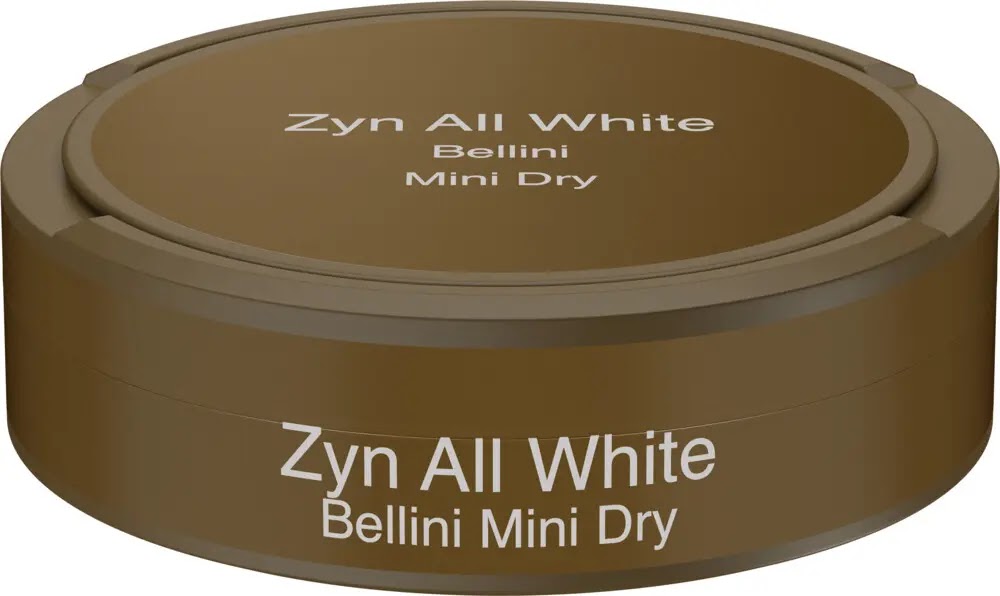
For example, the PMI product Zyn is sold in Norway with some tobacco included. ("The all-white appearance of the snus is made possible thanks to a composition of plant fiber and a small proportion of light tobacco. The mixture and the portion provide a soft fit and a long-lasting taste experience." translation from www.snuslageret.no/zyn/)

Sweden

In 2022, Sweden responded to a court ruling  which required it to remove e-cigarettes from medicinal regulation. It created a specific law for tobacco-free nicotine products (Act 2022:1257). The law will be fully in force in 2024. The regulations include health warnings, labelling requirements, reporting obligations, and premarket notification. Sweden's permissive approach to oral nicotine products is reflected in its expressions of concern about other EU countries banning them.

United Kingdom

The United Kingdom is no longer a member of the EU, but has to date maintained EU-consistent tobacco laws. 

In the UK and Scotland, nicotine pouches are not regulated under the same laws that cover tobacco and vaping products, but under consumer product safety rules. As a result, restrictions on advertising, labelling and minimum age do not apply. Despite concerns raised about the marketing of these products, and a call for government action, the UK government did not include reference to this in its recent announcements regarding tobacco law reforms.