Sunday, 5 September 2021

What they did in their summer vacation

It's that time of year again. The days are growing shorter, and parents are scurrying to find school outfits for children who have suddenly grown taller. Soon, teachers will be assigning their charges with the ritual essay "how I spent my summer vacation", and using the results to build their lesson plans for the coming year.

This post reviews actions of the tobacco industry over the summer months  -- and points the way to issues that health regulators may want to turn their attention to.

Yet more nicotine products on the horizon

1) Canadian-made PODA pods

A new entry in the "what nicotine product will they think of next" category is being promoted to investors this week. Vancouver-based Poda Lifestyles has developed a heat-not-burn nicotine device that replaces tobacco with synthetic nicotine and tea leaf pellets. They tell investors that this product is "outside the scope of existing tobacco regulations and duties". The team which is guiding this initiative includes alumni from Philip Morris and JUUL.

It would appear that Heat-not-burn nicotine-tea devices may fall outside Canada's federal tobacco laws? Because they are not made of tobacco and if don't produce an aerosol, they are likely not captured by the current definitions in the Tobacco and Vaping Products Act.

2) TJP and Canadian-made nicotine pouches

An Ontario factory is planning to manufacture 36 million nicotine pouches per month starting early next year. TJP announced last month that it had recruited investments to permit production out of Pickering, a short distance from Toronto. This privately-held company began as the maker of "The Juice Punk" e-liquids.

Nicotine pouches are not currently legal for sale in Canada, as they fall under the Food and Drugs Act and thus require authorization. Last year Health Canada issued an advisory that they were "unauthorized" and demanded that some be pulled from the market.

In recent years they have become energetically marketed in other countries as a harm-reduction product.

Big Tobacco drifts towards Big Pharma

Philip Morris International is the owner of Rothmans, Benson and Hedges, a company which sells about  4 in 10 of the cigarettes legally sold in Canada. Both the international company and its Canadian operation have ramped up their efforts to "transform" their operations to sell an enhanced range of nicotine and non-nicotine products, redeem their reputations and regain influence over public policy. 

This summer PMI made headlines as it attempts to acquire Vectura, a manufacturer of inhaled delivery systems for asthma and chronic lung disease medications manufactured by other pharmaceutical firms. Its ownership by a tobacco company has raised concern and alarm among U.KI. health charities. 

PMI has recently acquired other pharmaceutical companies, including OtiTopic (which makes medications for heart disease) and Fertin (which makes gums and other oral delivery systems, including NRT and cannabis). 

PMI now has a foothold in 2 Canadian pharmaceutical operations. It will soon own 100% of Fertin's Canadian operation, Nordiccan (which currently markets cannabinoid pouches in Canada) and 40% ownership of Medicago (which controversially received federal funding to work on a COVID vaccine).

Philip Morris International tries steer Endgame thinking

In July, the new CEO of Philip Morris International (Jacek Olczak) made headlines by calling on the U.K. government to ban cigarettes within the next 10 years. The United Kingdom is currently developing a new (post-Brexit) tobacco plan. In 2019, the government called on the industry "to make smoked tobacco obsolete", but few established tobacco control leaders in that country are calling for legal controls to make that happen. 

Rothmans, Benson and Hedges gets citizen volunteers to clean up its commercial waste

Cigarette filters are a single-use plastic that is one of the most frequent forms of litter and a source of pollutants, which is why there is increasing pressure for regulations that impose producer responsibility on the industry. In an apparent effort to head regulations off at the pass, Philip Morris' Canadian operation is trying to gain a leading position in the Canadian response to cigarette waste. 

This summer it ramped up these efforts on two fronts. 

1. Through a partnership with Terracycle, Rothmans, Benson and Hedges is funding community groups to sign up to collect cigarette butts (either through sweep-up operations or public ashtrays) and remit them in return for gifts or cash. Each pound of waste is worth $1. This summer a "sweepstake" contest offered incentives to newly recruited locations and individuals.

2. This summer, RBH offered grants of up to $5,000 to non-profit organizations to support litter cleanup projects (the activities were not restricted to tobacco waste). Eligible expenses were restricted to organizing, hosting and promoting -- groups would receive money for the equipment required to conduct the cleanup, but were expected to provide volunteer labour. This summer $75,000 in grants were provided: the predominant  recipients seem to be ATV clubs.  


More grants were offered at the end of the summer for projects in education, environment and community development. (Notwithstanding the FCTC recommendations that government "denormalize and, to the extent possible, regulate activities" like these, the Canadian government has remained silent on this RBH initiative).

Japan Tobacco has withdrawn its e-cigarettes from Canada

This spring JTI notified consumers that it would be pulling out of the Canadian market in August, and did so by mid-month. Despite Canada being one of the world's six largest vaping markets, two major tobacco companies have decided to abandon efforts to market their e-cigarettes here. Imperial Brands pulled its myBlu e-cigarettes in July 2020, citing Canada's packaging and labelling requirements. JTI did not acknowledge whether the regulations to cap nicotine were a factor in its decision to quit Canada, although it remains active in other markets where nicotine levels are similarly controlled.   


Imperial Tobacco Canada is looking to expand into non-nicotine products

In late spring, Imperial Tobacco Canada (which is owned by British American Tobacco) launched a new strategy for its operations in Canada. Their press release highlighted their recent acquisitions in cannabis production and their intention to extend their marketing beyond tobacco and nicotine ("For our consumers, we want to offer a range of enjoyable and responsibly marketed products in tobacco, nicotine and beyond.")


Some vaping liquid manufacturers have found a work-around Canada's 20 mg/ml nicotine cap.

On July 23rd, new federal regulations banned the sale of vaping liquids that contained more than 20 mg/ml of nicotine. The very next day, one of Canada's older vaping producers (Theravape) informed consumers that the new ISO methods required by Health Canada meant that products that were previously sold as 34 mg/ml could now be considered 20 mg/ml. They were able to lower the amount by consideringly the nicotine molecules in a nicotine-salt compound.


Health Canada adopted the ISO standard that results in this down-grading after being encouraged to do so by vaping manufacturers. The World Health Organization has also recognized the ISO standard


 Rothmans revamps its retailer contracts

Tobacco companies give rebates to retailers in return for promotional concessions. This summer, RBH revamped its retail contracts to offer rebates of $4.50, $5.50 or $6.50 on each carton of cigarettes. To get the lowest rebate, retailers must participate in on-line 'training' sessions that inform them how to promote brands, gather data for the company and accept minimum shipments of some products. Higher discounts are given to retailers which sell IQOS, and higher yet to those who are trained to encourage smokes to use IQOS. 

Someone is investing heavily to mobilize against flavour bans

Most major tobacco control reforms have been met with well-organized opposition efforts that are framed as citizen's movements. For decades, tobacco companies created the "Smokers' Freedom Society", PUBCO and restaurant associations, the Alliance for Sponsorship Freedom, and other organizations as a seemingly human shield against public health regulations. 

The is summer Rights4Vapers has all the hallmarks of an industry-funded ersatz-grassroots effort. With a large RV with a specialty skin, a handful of campaigners are working their way through a 26 day tour of Ontario and Quebec to mobilize opposition to regulations on vaping products. 

The printed placards, t-shirts, and the social-media presence suggest a well-funded and professionally organized effort. The only thing missing so far has been a crowd to mobilize. 

Their kick-off rally in Ottawa, billed as drawing 500 to 600 protesters, was attended by about 100 people, many of whom appeared to be vaping store owners who were thanked at the end of the small demonstration for coming to Ottawa from across Ontario to participate. 


JUUL recruits medical journal to publish a volume of pro-vaping studies

In early summer, the American Journal of Health Behaviour published a supplemental volume with 11 studies funded or authored by JUUL which promote the health benefits of their products. It was later revealed that JUUL had paid the journal US$51,000 for the publication. The publication prompted criticism from researchers, public health bodies and politicians. 

New trademarks show how flavour descriptors are used as branding

Each of the companies has filed trademarks in Canada this summer which point to potential new  marketing activities.

Only weeks after Health Canada published a proposal to restrict flavours other than tobacco, mint, menthol and combinations of those three flavours, BAT's e-cigarette branch trademarked new mint brand descriptors for its VUSE e-cigarettes: River Mint and Forest Mint. It also registered a brand name for cannabis-vaping liquids (CBD Mix) and for a new specialty store Vusionry  BAT also registered a new design for its NRT, ZONNIC, which is manufactured by BAT-owned Niconovum and currently marketed in the United States.  
 
This summer, Philip Morris International filed almost two-dozen trademarks for vaping products and heated tobacco products with unusual and evocative names: Yugen, NoorApricity, Terea Turquose, Tidal Pearl, and others. 

Saturday, 14 August 2021

The vaping industry compliance deficit

This week Health Canada released the results of its inspections of the instagram accounts of Canadian vaping suppliers. Just over half (53%) of the 304 suppliers failed inspection. 

The industry fared somewhat better on this test than they did on the previous round of inspections of their retail stores in the summer and fall of 2019. On those occasions, fewer than 1 in 5 specialty vaping stores passed inspection (although the large majority of convenience stores did).

The willingness of so many vape stores to ignore federal health regulations is not only a challenge to public health authority, it is also a challenge for their strategies to protect the public from addiction and other risks associated with the repeated inhalation of vaping aerosols.

Only a few bad apples - or a scofflaw industry?

These poor inspection results could reflect a failure of certain operators to understand the law or ignorance of what is expected of them. Alternatively, the high rates of disobedience could reflect a culture of defiance and a general willingness of this business sector to defy public health direction.

To assess this alternative, we conducted a survey of certain practices of the leadership of the vaping industry. This leadership is found in the  companies or individuals which serve as directors or spokespeople for the Vaping Industry Trade Association (VITA), the Canadian Vaping Association (CVA) or Rights4Vapers. These are the trade groups that are are leading the opposition against additional restrictions on vaping sales. Are the companies and individuals leading these organizations also leading by example when it comes to obeying existing regulations?

These directors and spokespeople include the e-cigarette branches of two international tobacco companies (Logic-JTI and VUSE-BAT), large Canadian and international manufacturers (Dvine, Flavourart), wholesale distributors (Pacific Smoke, Valor) and retailers. Because of its importance in the industry and its previous directorship of VITA, JUUL was also included in the study. Of these 20 businesses, 12 operate websites that offer on-line sales and delivery.  (Logic was included in the study, although JTI-Macdonald withdrew the product from the Canadian market shoftly after the study was completed.)

The websites of these businesses  were reviewed to assess their compliance with a selection of provincial and federal vaping regulations, including whether they:

A. offered online sales of vaping liquids that contained more than 20 mg/ml of nicotine, as required under federal regulation
B. displayed online promotions for flavours that re not permitted under federal law
C. failed to display the mandatory health warning (required by federal regulation)
D. included testimonials in online promotion of vaping products (prohibited under federal law)
E. accepted online orders for delivery to Quebec residents (against Quebec law)
F. accepted online orders to deliver flavoured vaping products to Nova Scotia, where such sales are not allowed
G. accepted online orders to deliver flavoured nicotine vaping products to Prince Edward Island residents, where such sales are not allowed
H. incluuded lifestyle promotions in online advertising of vaping products (prohibited by federal law)

Their prior business record was reviewed, and evidence sought whether they:

I. had been in operation when the sale of vaping products was illegal in Canada
J. had previously been identified as non-compliant during Health Canada's 2019 nspection of brick-and-mortar retail stores  

The results of this inquiry were documented in a report, "The compliance of Canada’s vaping industry leaders with seslected federal health regulations", which can be downloaded here. Five key findings are described below. 

1. Websites operated by multinational tobacco companies are generally compliant. Independent retailers generally are not. 

The only two companies which were found compliant with all measures relevant to their online operations were those managed by two of the world's largest tobacco companies: Logic vapes, managed by Japan Tobacco's subsidiary JTI-Macdonald, and VUSE, managed by British American Tobacco's subsidiary, Imperial Tobacco Canada Ltd. JUUL had the next highest compliance rate, failing only with respect to its apparent willingness to ship to Nova Scotia and Prince Edward Island.  

Of the 20 companies in these leadership positions, 8 are independent vaping specialist retailers which conduct online sales. Other than with respect to nicotine concentration, these companies were generally non-compliant with all of the other measures, with the exception of offering to sell higher nicotine levels. 


2. Retailers and manufacturers use code-names and advertising copy to circumvent prohibitions on promoting flavours.

Canadian federal law does not currently ban the sale of any flavours, but it does prohibit the promotion of certain flavours. Under the Tobacco and Vaping Products Act  “No person shall promote a vaping product … through an indication or illustration… that could cause a person to believe that the product contains [confectionery, dessert, cannabis, soft drinks, energy drink]”. 

This review found that more than one in ten (13%) of the flavour offerings displayed on the websites of the 12 companies offering on-line sales were found to promote a prohibited flavour (187 of 1,431 flavour-offerings). Although the prohibited flavour was rarely displayed on the product, its taste was promoted through suggestive words, through additional description or by statements attributed to other consumers. The websites of nine of the on-line retailers (75%) displayed such flavour promotions.

Examples:

Cotton candy flavour was called Blue Carnival, Pink Fluff or Cotton Fluff, or was accompanied by a flavour description like "imagine what Pink Fluff tastes like (Make sure you are thinking of a theme park.)"

Apple Pie flavour was called Apple 3.14 or 3.14 crust or was described as "Ripe and mild apple with a crust."

Orange Soda was called Orange and So or Orange Sparkle, and was described as "A delicious orange bubbly beverage.”

Red Bull flavour was called Red Bovine and Hyper and described as "Everyone's Favorite Red Energy Drink.”

Slushy flavoured vape juice was illustrated with a slush-drink and called "slushnado". 
 
3. Health Warnings are often downplayed

Federal regulations require all vaping product advertisements (including display of product) to be accompanied by one of two health warnings mandatd by the Vaping Products Promotion Regulations:

WARNING: Vaping products contain nicotine, a highly addictive chemical. – Health Canada
WARNING: Vaping products release chemicals that may harm your health. – Health Canada

The regulations establish a minimum size and other requirements for the display of the health warning in advertisements. For example, the warning display area must be at least 20% of the surface area, the warning must be in black and white, it must occupy 60% -70% of the warning display area, be in a sans-serif font, be separated by a border, etc. Lesser requirements are set out for advertising transmitted by means of telecommunications “that does not allow the display” of health warning messages in conformity with those requirements. In such cases, the warning must be at the beginning of the advertisement and must meet certain requirements for font size and layout.

Of the 20 websites reviewed, half were compliant with the regulations, either because the nature of the website did not require one (5 websites) or because the warning met the requirements (5 websites). Among the others, seven displayed warnings that were smaller than required by regulation and three did not provide a health warning.

Compliance with health warnning requirement


Non-compliance with health warnig requirements

4. Provincial restrictions are openly flouted by out of province businesses

Some provinces have imposed restrictions on internet sales or on the sales of certain vaping products. The Quebec government bans internet sales of tobacco and vaping products and Nova Scotia and Prince Edward Island ban the sale of flavoured vaping products.

Nonetheless, nine of the 12 companies which sell products on line appeared willing to accept orders for flavoured vaping products and to ship them to those three provinces. Their willingness was indicated in their shipping policies or was established by processing a test order up to the point of payment. 

The two companies which were not willing to do defy any of these provincial restrictions were those managed by tobacco companies: Logic (JTI-Macdonald) and VUSE (BAT-Imperial Tobacco). JUUL was willing to sell to Prince Edward Island, but not to Quebec or Nova Scotia.

5. Most vaping industry leaders have a previous record of non-compliance 

Three-quarters of the companies in leadership positions within the vaping industry have a history of non-compliance with federal health regulations.

It was illegal to sell nicotine vaping products in Canada prior to May 23, 2018 unless approval had been given under the ederal Food and Drugs Act. Health Canada made this clear in 2009, making public its efforts to ask suppliers to stop selling these products.  Of the 20 leading vaping companies reviewed, 15 had defied this instruction and were actively selling vaping products prior to May 2018. The companies which respected the prohibition on selling in Canada were those tobacco-industry associated suppliers (Logic, VUSE, JUUL) and a multinational manufacturer which began operations after 2018 (Snowsplus Tech). No information was found for one wholesaler. 

In 2019 Health Canada conducted about 1,000 inspections of brick-and-mortar specialty vaping stores, finding that most (84%) were promoting products in ways that were not allowed under federal law. Of the 11 brick-and-mortar retailers who have leadership positions in these trade associations, 9 were identified as non-compliant in Health Canada's inspection reports. (Because Health Canada did not make public the names of the stores which passed inspection it is not possible to conclude that the other two stores were compliant).

Implications for public health

The Canadian vaping industry was developed as a black market and appears to continues to operate with a level of disregard for the health regulations set by federal and provincial governments. 

The three inspection reports made public by Health Canada establish the challenge faced by government in implementing measures to protect young people and non smokers from being encouraged to use (and become addicted to) these products and to protect vapers from marketing that interferes with knowledge of the risks involved. 

Our review of the websites managed by the industry's leaders provides additional evidence that the vaping industry's failure to comply with health regulations does not likely result from a poor understanding of the law, but more likely reflects a willingness to disrespect it. 

In 2019, Health Canada wrote vaping and retail organizations to emphasize that "this level of non-compliance is unacceptable." To date, however, the department appears to have largely focused on sending warning letters, not imposing fines for non-compliance. Parliament set significant penalties for breaking the law (up to $500,000), but a penalty can only result from the federal government taking offenders to court. 

Public health authorities currently cannot rely on vaping product suppliers to comply with health regulations. Increased enforcement activities are justified, as is a review of alternative methods to manage the supply of these products. 

The report "The compliance of Canada's vaping industry leaders with selected federal health regulations" can be downloaded here. 


Wednesday, 14 July 2021

Six Insights from the Canadian Tobacco and Nicotine Survey.

Earlier this week, Statistics Canada made available the public use microfile for the second wave of the Canadian Tobacco and Nicotine Survey. The agency has further modernized its data release methods, and the file is easily accessible to the public. This post looks at some key findings from this survey - more detail and data tables are available on a downloadable fact sheet.

Background on The Canadian Tobacco and Nicotine Survey (CTNS)

The CTNS was put in place in late 2019, following a decision to terminate the biennial Canadian Tobacco, Alcohol and Drug Survey (CTADS) after 2017. The first wave of the CTNS was conducted in October to December 2019, with the second wave repeated in December 2020 to January 2021. The first results of the CNTS 2020 were released by Statistics Canada on March 17, 2021. 

This survey asked questions of  8,112 Canadians, although only 41% of those who were asked to participate agreed to do so. Four times as many Canadians participated in CTADS, and the Canadian Community Health Survey gathers information from more than 10 times as many people. 

The small sample size of the CTNS severely limits the usefulness of the survey to assess differences between provinces or over time. A survey of this size does not provide for monitoring of the impact of regulatory change. For example, Nova Scotia's ban on flavoured vaping products had been in effect for more than 8 months before the survey was taken, but the sample size for Nova Scotia (404) was too small to produce enough vapers to meet Statistics Canada's quality standards for release. 

As a result, we are not permitted to report that the CTNS found that most Nova Scotia vapers were continuing to access flavours in that province, even though the sale of those flavours had been prohibited for several months. Had the sample size been larger, we could likely have provided this evidence that public health measures have been undermined.

1. Vaping rates have stabilized in Canada between 2019 and 2020.

There is little difference in the estimated proportion of Canadians who have used e-cigarettes in the past month between late 2019 and late 2020. 


2. Four in 10 Canadian vapers are under 25 years of age. Three in 10 have never smoked cigarettes.

The CTNS survey results show that although Canadian youth and young adults (aged 15 to 24) make up only 15% of the surveyed population, they represented 40% of those who vape. This survey estimates there are 425,000 teenage vapers in Canada, 314,100 of whom have never smoked a cigarette. Of the estimated 274,000 young adult vapers (aged 20-24), 113,000 have never smoked cigarettes. Among the 760,400 vapers older than 25, slightly more than a third (279,600) are former smokers, almost half (372,000) continue to smoke cigarettes and one-seventh (108,000) have never smoked.

In the fall-winter of 2020-2021 there were about 1.46 million Canadians who had vaped in the past month. Of these, one-third (485,100) were "former smokers." The remainder were "never smokers"(438,500, 30%) or "current smokers" (532,400 dual users, 38%).
 

3. For every 100 people who have tried vaping, 14 became daily users

One indicator of becoming addicted to a substance is regular use. The CTNS explored the use of 3 inhalable drugs: vaping liquids, tobacco smoke and cannabis. For all three of these substances, between one-tenth and one-fifth of Canadians who reporting having used the drug even once in their lifetime were daily users at the time of the survey.

The highest proportion was for cigarettes --- with daily use by 17 of 100 lifetime users. For e-cigarettes, the number was slightly lower, with daily use by 14 of 10 lifetime users. The proportion of ever users of cannabis was 10%.

4. Four in 10 smokers made a quit attempt over the past year. One in 3 of those would-be quitters used a cessation aid.

Two-fifths (42%) of smokers and recent quitters said they had made a quit attempt in the year prior to being surveyed -- and almost one-third (30%) tried two or more times.

When asked whether they had tried to quit using specific approaches, the majority (62%) said they had tried to quit on their own. Almost one half (47%) said they had reduced the number of cigarettes they smoked, one-quarter (26%) said they had switched to vaping, slightly more (30%) said they had used nicotine replacement and one-quarter (27%) said they had used an internet or "other" method. Because prescription medication was not identified on the questionnaire, treatments like varenicline may be included under "other". These answers were not exclusive, and smokers may have tried more than one method during the year or even used several concurrently.

The number of smokers who reported using a Quitline or Smokers Helpline or using a smart phone app was so small that the survey result is unreportable.


5. Most smokers were not successful in their quit attempts – despite the quit method they used.

The vast majority (85%) of smokers who reported making a quit attempt in the past year were still smoking at the time of the survey. Of the estimated 1.6 million Canadians who quit for one day or more over the past year, only 242,000 were still not smoking at the time of the survey (15%). 

Differences in the outcomes for those using different cessation approaches were not tested for statistical significance but are presented below. The largest number of successful quitters were those who identified as using no quit method.


6. Tobacco-flavour is the only vaping flavour not attracting young people or recreational users to vape.

The CTNS survey asked respondents who had vaped in the past month which flavours of vaping liquid they vaped most often. Eight options were offered: tobacco, fruit, candy, dessert, mint, or menthol, flavourless, and no usual flavour. Of these, only tobacco, mint, menthol and flavourless will be permitted by Health Canada's proposed restrictions on vaping flavours.

Tobacco flavour is most often chosen by older Canadians and by those who are using e-cigarettes to try to reduce or stop smoking. So few teenagers reported preferring tobacco flavour that the number is not reportable.  

The survey also enquired about vapers’ main reason for vaping. Because of the limited size of the survey, these choices cannot be looked at individually with respect to flavour choices, but must be grouped.

Of the eight options, three can be categorized as not being related to trying to reduce smoking. These were the reasons given by almost one-half (46%) of current vapers:
  • Curiosity, you just wanted to try it
  • Because you enjoy it 
  • To reduce stress or calm you down
Four optional reasons were given that were related to reducing tobacco use, and these were chosen by two-fifths of smokers (43%) . 
  • To quit smoking cigarettes
  • To cut down on smoking cigarettes
  • To use when you cannot/are not allowed to smoke cigarettes
  • To avoid returning to smoking cigarettes
The eighth option was an unclassifiable “other” reason, chosen by one-tenth (11%) of vapers.
 
Tobacco flavour is most often chosen by older Canadians and by those who are using e-cigarettes to try to reduce or stop smoking. So few teenagers reported preferring tobacco flavour that the number is not reportable.


Monday, 5 July 2021

Lessons for tobacco control from climate-change action plans

Last week, Royal Assent was given to the Canadian Net-Zero Emissions Accountability Act. This new law, as the Library of Parliament describes it,  "requires the Government of Canada to set national targets for reducing greenhouse gas (GHG) emissions and establishes a planning, reporting and assessment process with the aim of achieving net-zero emissions by 2050."

On the day the bill became law, the government announced new elements of its plan to reduce greenhouse gas emissions: From 2035, all cars and passenger trucks sold in Canada must be zero-emissions.

This post explores the parallels between Canada's targets for greenhouse gas and tobacco use reductions, and whether the measures being put in place to address climate change might also benefit public health if applied to tobacco use.

The parallels 

Canada's strategies to control tobacco and to address climate change share a number of common characteristics. They both:

  • primarily address the negative consequences of combustion
  • involve the shared jurisdiction of federal, provincial and territorial governments
  • seek to modify the behaviour of consumers and producers
  • are challenged by the interests of those with vested commercial interests 
  • are the subject of international framework conventions
  • are embracing technological solutions, suchy as renewable energy or alternative nicotine
The federal goals 

Over the past 30 years, the federal government has set several domestic and international goals to reduce tobacco use and to reduce greenhouse gas (GHG) emissions. Environmental goals are generally expressed as a percentage reduction in emissions equivalent to mega-tonnes of carbon monoxide (MT CO2 eq). Tobacco use goals are generally expressed as achieving a reduced level of smoking or tobacco use prevalence (generally interpreted as those who have smoked cigarettes in the past month).

Climate change: Canada's first international commitment to reduce GHG emissions was in 1992, at the United Nations Conference on Environment and Development in Rio at which the United Nations Framework Convention on Climate Change (UNFCCC) was signed. Subsequent targets were agreed to at Conferences of the Parties to this convention, including the Kyoto Protocol (2005), the Copenhagen Accord (2010) and the Paris Agreement (2015). At the most recent conference (2019), Canada committed to "a net-zero-by-2050 goal".

Smoking: The federal government has adopted tobacco control strategies since 1963, but quantified targets for general prevalence were first adopted in 2001, when the aim was to reach 20% prevalence in 2006 and reduce cigarette consumption by 30%. The goal of 12% was subsequently set for 2012, and in 2017 Health Canada adopted the goal of "less than 5% tobacco use by 2035".  In 2013, as part of the World Health Organization's Global NCD Action Plan, Canada participates in the goal of reducing smoking prevalence between 2010 and 2025 by 30% (from 20.8% to 14.6%). 

These goals are shown in the figure below, together with data on annual levels between 1990 and 2019. To illustrate the rates of progress of both goals on the same graph, prevalence targets have been converted into the approximately equivalent absolute level of cigarette consumption. (Data and sources can be downloaded here).


Provincial targets to reduce tobacco use

Six provincial governments have also set targets for tobacco reduction.
  • New Brunswick has aligned its target with the federal objective of less than 5% by 2035.
  • Quebec, Ontario and British Columbia have set a target of 10% prevalence, aiming to achieve this in 2023 (ON, BC) and 2025 (QC).
  • Alberta set a target for 12% prevalence for 2022.
  • Newfoundland and Labrador aims to reduce smoking to 18.1% by 2025.
The other 7 provinces and territories do not have quantified targets for tobacco use reduction. Most provinces and territories have not updated their tobacco strategies since 2015. The exceptions are Quebec (2020), Ontario (2018), New Brunswick (2019), and Prince Edward Island (2017). More information on these goals and the strategies behind them is provided on a downloadable fact sheet.


International alignment for a 5% prevalence target.

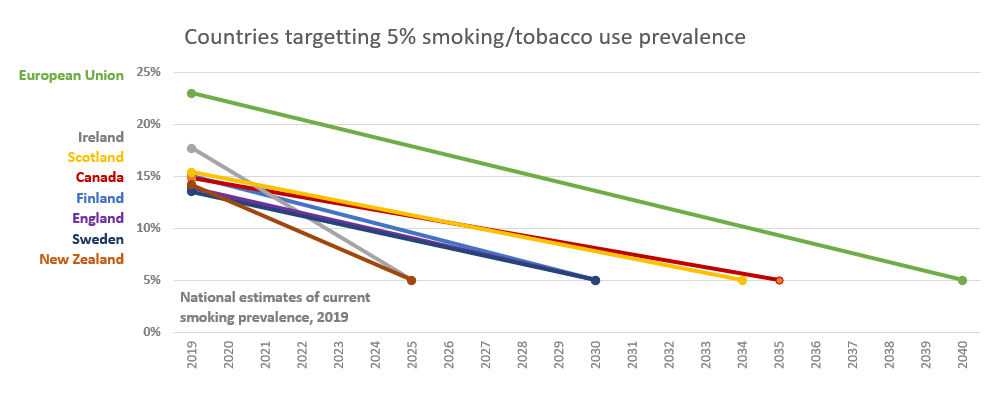
Several other national governments have adopted an "endgame", "smokefree" or other tobacco reduction goal that is formally interpreted as aiming for under 5% prevalence. Some have identified it as smoking prevalence (e.g. New Zealand), some as tobacco-use prevalence (e.g. Canada) and some as nicotine or tobacco use (e.g. Finland). Among these countries, two are aiming to achieve this objective by 2025. These goals, illustrated below, are described in a backgrounder which can be downloaded here.

Other potential lessons from climate change

Legal accountability is only one tool that the climate change strategies are using that tobacco control has not yet embraced. Others include:
  • An integrated federal-provincial planLessons from climate change
    The Pan-Canadian Framework on Clean Growth and Climate Change  is a national framework plan that includes commitments by federal, provincial and territorial governments. A federal-provincial approach for tobacco control formerly existed as the National Strategy To Reduce Tobacco Use (NSTRTU), which was on place from the mid 1980s to the late 1990s: this inter-jurisdictional approach was disbanded shortly after its last strategy was agreed to in 1999.
  • Equitable pricing protection across Canada 
    As a component of the pan-Canadian framework, provincial governments are free to set their own carbon pricing systems but the federal government will act unilaterally if provincial carbon pricing measures do not meet the national benchmark. The Greenhouse Gas Pollution Pricing Act ensures minimal use of pricing to reduce GHG.

    A similar challenge exists for tobacco, where provincial taxes vary considerably across provinces. Provincial taxes in Quebec, for example, result in cigarettes in that province being markedly cheaper than in most other provinces. (They are also very cheap in Ontario). The federal government could close that gap, as it does for carbon, by applying a higher federal tax in Ontario and Quebec than it does in provinces which meet the internationally recommended level of 70% of purchase price. We have previously recommended that the federal government use its tax power to ensure a minimum $0.45 tax per cigarette.
  • Accountability
    The new Canadian Net-Zero Emissions Accountability Act initiates several measures in support of the attainment of Canada's climate change goals. These include requirements for the Ministers of Environment and Finance to prepare and make public reports on progress, structured systems for public engagement and expert advice, and requirements for independent oversight. Should climate change targets not be met, the law requires governments to provide details on how they will get back on track. (This concept was first introduced to Parliament in 2007, and was twice defeated before its adoption this spring). 

Friday, 18 June 2021

Newly-announced vaping regulations are urgently needed -- as are larger reforms of Canada's approach to tobacco companies

Physicians for a Smoke-Free Canada welcomes the federal regulatory measures announced today to protect young people and non-smokers from the marketing of highly-addictive and enticingly flavoured vaping products.

The new limits on the amount of nicotine that is permitted in vaping liquids will protect many young people from addiction. This measure will be in place in a matter of weeks and urgently required. Vaping products are highly addictive: for every eight young Canadians who vape even once, one has become a daily user. Capping nicotine concentration at 20 mg/ml will align Canada's health regulations with those in the European Union and other countries whose experience of youth vaping has been less severe than countries, like Canada and the United States, where higher levels have been allowed.

The proposed restrictions on flavours in vaping products are also urgently needed. Attractive flavourings entice young people to experiment with vaping and they increase the risk of addiction by encouraging them to continue vaping as they try out new flavours. Flavours mask the harshness of inhaling nicotine and make it easier to bring the particulates and other harmful chemicals deep into the lungs where they cause more damage. These pleasant flavours are associated with healthful products and discourage young people from understanding how harmful these products can be.

We very concerned at the misguided decision to exempt mint and menthol flavours from the proposed flavour restriction and see no reason for the government to have yielded to the pressure tactics of the tobacco and vaping industry. We know from previous experience with restricting flavourings in in tobacco products that the menthol-mint exemption significantly undermines the health benefits of the proposal as mint and menthol are favourite flavours of young people. Moreover, the evidence to support banning menthol is greater than for some other flavours,  if only because menthol flavouring has been used for much longer and its health impact has been studied in more depth. This partial ban also exposes Canada to challenges at international trade tribunals, as the United States found when its 2009 exemption for menthol was successfully challenged at the World Trade Organization.

As welcome as today's announcements are, the new regulations are only band-aid solutions. They do not address the underlying problems of the tobacco market or the structural weaknesses of the federal law. The 2018 Tobacco and Vaping Products Act has proven inadequate both at protecting young people and at reducing harm to smokers. This law was based on the dangerous and incorrect assumption that harm reduction could be achieved by giving nicotine companies more marketing power in a liberalized commercial vaping market instead of requiring them to end the sale of their most harmful products. 

Random Clinical Trials and longitudinal studies have shown that while e-cigarettes can help some smokers quit when used in therapeutic settings, they do not improve quitting rates at a population level when sold as fast moving consumer goods in convenience stores. Should Parliament restructure the law to ensure that e-cigarettes are provided only to smokers and in the context of quitting or harm reduction, then the issues of flavours and nicotine concentrations can be re-examined.

After decades of too-little-too-late regulation-making, it is time for a new approach to smoking and nicotine addiction. When Parliament returns next fall, legislators should give priority attention to the smoking epidemic and the 50,700 preventable deaths it causes each year. They should demand that the government oblige tobacco manufacturers to phase out the sale of combustible tobacco products and end their recruitment of new nicotine addicts.

Thursday, 17 June 2021

Recent developments in the Canadian vaping market

This post reports on some recent activities and decisions of vaping manufacturers.

Setting an election agenda: mobilizing against vaping regulations.

Over the past few months, federal proposals to restrict the types of vaping products that can be sold in Canada have become the target of industry-funded campaigns.

The Canadian Vaping Association (CVA), which represents specialty vape shops, has focused on opposing restrictions on flavours. Through its mobilization web-site, it has arranged for about 100,000 indivduals to send emails to members of parliament -- that's about 1 in 10 of all adult vapers in Canada. This was a lobbying season, and the CVA was the most active federal lobbyist group this  April. Meanwhile, the Vaping Industry Trade Association (VITA), which represents vaping manufacturers and convenience stores, has focused on mobilizing opposition to limits on the amount of nicotine that can be put in vaping liquids. 

The impact of these campaigns will be known later this spring, when the government does (or does not) finalize its plans to put a ceiling of 20 mg/ml of nicotine in vaping liquids, or introduce proposed regulations to restrict flavours. 

Sayonara: Japan Tobacco is pulling out of the Canadian Vaping Market

In e-mails to its customers and on its web-site, Japan Tobacco has announced that its Logic vaping devices will be discontinued in Canada as of August. No explanation is offered, and the decision has not yet received much attention in the business or trade press. Japan Tobacco has not announced closures in European markets where nicotine levels are capped - like Ireland and the United Kingdom, although it has also withdrawn their brand from Iceland


Click and Collect: Circumventing bans on selling flavoured vaping in convenience stores

Ontario and British Columbia continue to allow flavoured vaping liquids to be sold, but do not allow them to be sold in convenience stores. This is a problem for the tobacco companies (like BAT/Imperial Tobacco) who have powerful contracts and existing supply systems with 28,000 convenience stores and less sway with the 1,500 or so independent vape shops across Canada. The solution?  Click and collect. BAT offers the option of an online transactions to purchase its VUSE vaping products, with pick up at the local Convenience store. 

"Beyond Nicotine" BAT moves to market CBD vaping products in Canada

BAT has promised investors that it is moving "beyond nicotine" and will be selling products that deliver other drugs. It is currently test-marketing CBD vaping pods for its VUSE devices in Manchester, England. Recent trademark registrations in Canada suggest that it is preparing to sell them here too. This May, BAT registered trademarks for three CBD designs for Vuse pods - smooth berry CBD, Cool Mint CBD and Chilly Mango, CBD. It also registered the phrase "Ryde your Rhythm" for use with CBD and tobacco products. (There may be some regulatory complications - Health Canada has signalled that it will be reviewing the flavours permitted in cannabis vaping products). 


There's an app for that:  Bluetooth-enabled vaping devices

Last winter BAT's Finance Director, Tadeu Marroco, told investors that Canada would be the pilot site for a Bluetooth enabled VUSE device -- presented as a way to conduct age-verification. ("In summary, we are entering 2021 with good momentum across all three new categories, with some exciting new launches planed. In vapor, we are launching a Bluetooth enabled version of Vuse providing electronic age verification. The product will be launched in Canada, as a pilot market in the first half of 2021")

JUUL introduced a Bluetooth connected vaping device in Canada in 2019. Perhaps in response to concerns about privacy and industry surveillance, it now claims that the related App does not monitor usage.


In 2020, the number of vaping products on the Canadian market grew, and prices dropped

The trade analyst group, ECigIntelligence, reported that between 2019 and 2020 number of vaping  products for sale in Canada doubled (from 244 to 498), while the prices fell. Prices of the cheapest category - open pod systems -- fell by 20% over the year to an average of $30. There is currently no formal registry of products for sale in Canada, unlike the European Union, where companies are required to provide advance notice of market introduction. This results in publicly-available lists of products for sale, such as those maintained by the Belgian Ministry of Health.

Canada is the world's third largest vaping market

Italian trade analists Finaria reported that Canada had the third most valuable e-cigarette market, with U.S. $1.08 billion in revenue in 2020, slightly ahead of France and Germany. Ahead of Canada are the United Kingdom (with revenue of $3.1 billion) and the United States (with revenue of $6.2 billion). This is consistent with BAT's report last December that Canada was the second in its list of  the 5 countries which made up 75% of the world's sales of closed vaping products (the others were the USA, U.K., France and Germany) . 


JUUL changes management in Canada.

In April, Juul made two significant changes to its Canadian operations. It replaced its CEO and it withdrew from the Vaping Industry Trade Association. The first decision was implemented without much fanfare: Michael Nederoff was quietly replaced with Eric Omwega. (Mr. Nederoff is now heading a cannabis business).  The following reason was provided for leaving VITA: "While we have appreciated the opportunity to collaborate with VITA (Vaping Industry Trade Association), we will not be renewing our membership as we are not aligned on too many critical policy issues. For example, we support Tobacco 21 legislation (raising the minimum purchase age of tobacco and vaping products to 21), enhanced access controls at retail, and limiting flavour options."


Tuesday, 8 June 2021

Newly-released data provides more insight into smoking and vaping in Canada

 In recent weeks three new reports have been issued which shed more light on the tobacco and nicotine use of Canadians. 

Some of this newly-released data shows youth vaping in Canada remained high in 2020. Others show that over the past 3 decades, Canada has done better than most other countries at reducing cigarette smoking. 

1. The Canadian Postsecondary Education Alcohol and Drug Use Survey (CPADS) 

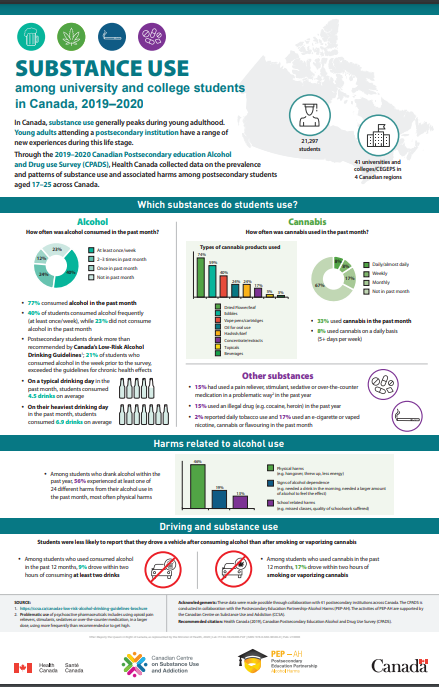
The first wave of Health Canada's new survey of post-secondary student drug use was released in May. Over 20,000 students aged between 17 and 25 attending 41 universities, colleges and CEGEPs participated in this survey in the fall of 2019 and the spring of 2020. 

The survey found that one in ten (10%) of the students surveyed had smoked cigarettes in the past month, and almost one in five (17%) had used vaping products (either for nicotine, cannabis or other products). A larger number - 24% - appeared to have smoked cannabis in the past month, that they reported using dried cannabis flowers or leaves, and a smaller portion - 4% - reported smoking other forms of tobacco, such as pipes, cigars or shisha.

In terms of daily use, roughly the same number used cannabis (8%) or vaping/e-cigarette use (7%). Daily cigarette smoking was 2%.

By way of comparison, in 2017-2018, the Canadian Community Health Survey (CCHS) reported that among students aged 18 to 24, current smoking was about 13% (4.5% daily and 8.3% occasional). The CCHS did not ask questions about vaping across Canada until this year.

A second wave of the Canadian Tobacco and Nicotine Survey (CTNS) of the general population conducted in the fall-winter of 2020-2021 estimated that 13% of young adults (aged 20-24) had vaped in the past month, as had 14% of teenagers (aged 15-19). A much smaller proportion of the CTNS  survey respondents had reported vaping daily in comparison with the CPADS (2% vs. 7%). 

Differences in survey methods (including questoinnaires) may have accounted for the Survey questionnaires for the CPADS were not included in the data release.

2. The Québec Survey on Tobacco and Vaping Products (QSTVP)

Quebec has restructured its ongoing survey of smoking patterns to include questions on vaping products. The results of the first wave of the survey (Consommation de tabac et des produits de vapotage au Québec en 2020) were also released in May.

The survey was conducted with more than 13,000 Quebers over 15 years of age and took place between July and November 2020. (The CTNS with the same target population involved 8,000 Canadians from across the country).

Similar to the CTNS and CPADS, the Quebec survey found past-month vaping was highest among young people and that tobacco smoking was lowest (other than senior citizens). This survey used slightly different age categories than the CTNS, and shows that: 12% of Quebecers aged 18-24 were past-month cigarette smokers and 15% were past-month vapers. Among teenagers (aged 15-17) smoking was lower (4%) and e-cigarette use was higher (18%) than with young adults. 


3. The Global Burden of Disease Collaboration and the Institute for Health Metrics and Evaluation.

In a series of articles published in the Lancet and an accompanying data release, the Institute for Health Metrics and Evaluation recently made available a wealth of information on smoking behaviours world-wide. The Global Burden of Disease collaboration pulled together data from 3,625 nationally representative surveys and made adjustments to standardize age and to address other issues that hindered comparability. 

This work was funded by the Bloomberg Foundation, and continues and expands the data gathering efforts that were previously housed within the World Bank and the World Health Organization. It complements their release last year of estimates of deaths and life years lost attributable to various diseases and causes. (This report is the basis of the estimate that  50,700 Canadian deaths are attributable to tobacco use.)

Canada has been more successful than most at reducing smoking over the past 30 years.

The good news is that around the world, smoking prevalence fell by more than one-quarter (-29.6%) between 1990 and 2019. The better news for Canadians is that here smoking prevalence fell by almost half (-47%). Among the 204 countries surveyed, Canada ranked ninth for reductions in age-adjusted smoking prevalence over this period. The leader was Brazil, where smoking prevalence fell by three-quarters (074%).

This data compilation shows that progress (and lack of progress) was found in all regions and at all national income levels. Costa Rica and Colombia did better than Sweden and New Zealand, Mexico came ahead of the United States and Germany and France did even worse than China.

The researchers counted anyone who used combustible tobacco on a daily or occasional basis as a smoker. This is different than other global rankings which compare daily smokers only, and allows a better comparison with countries where poly-tobacco use can result in a smaller proportion of smokers being daily cigarette smokers. 


In Canada, the early 2000s were years of faster progress

As shown in the graph below, the IMHE data suggests that the fastest deceleration of age-adjusted smoking rates in Canada, especially for women, was between the mid 1990s and mid 2000s. Notably, these were the years when promotional restrictions, smoking bans, graphic health warnings and tax increases were being implemented by governments across Canada.


Canada is keeping up with some, but not all, leading countries.

Canada's current rates are lower othan those in two other countries which have set endgame goals: New Zealand aims to reduce smoking to 5% by 2025, and Finland aims to reduce tobacco and nicotine use to 5% by 2030

Tobacco smoking in Canada is higher than in Sweden (although the gap has mostly been closed for women and has somewhat been closed for men). 

Canada is doing worse than Brazil, where smoking rates were about the same in 1990 and are now about half as high. In 2019, WHO identified Brazil as one of two countries  to have adopted the MPOWER suite of tobacco control measures at a "high level".