Thursday, 9 March 2023

Health Canada's vaping flavour ban is still missing in action. It's time to admit it is dead.

In June 2021 Health Canada stated its intention to reduce youth vaping by removing flavourings from vaping liquids, and published draft regulations to that effect. 

Predictably, the release of the draft regulations was followed with noisy and prolonged protests and intensive lobbying by those in the business of selling these liquids. More unexpected perhaps was the radio silence and prolonged inaction on the part of government following that initial release.

More than 600 days after federal officials last gave any sign that they intend to finalize these regulations, it now seems prudent to conclude that the flavour ban has been left to die on the vine.

This post reviews events that support this conclusion, and contrasts the lack of movement in Canada with measures underway in other countries.

Background: When Ottawa decides to say "no", the record of that decision is sealed.

It is rare for Ottawa's decision-makers to be transparent about their decisions to turn down policy recommendations. Outside of Parliamentary votes, the system of federal policy-setting is set up to make public those decisions which make regulatory changes, and to withhold the existence of decisions to reject such proposals.

This secrecy is enshrined in law: the Access to Information Act (s. 21) prevents disclosure of unsuccessful departmental recommendations for 20 years, and the existence of Cabinet decisions to reject regulations are secret until they are declassified 20 years later.  (Decisions that result in change are made public through Orders-in-Council and publication in the Canada Gazette).

With these constraints in place, it is impossible to state for certain that Health Canada, the Minister or Associate Minister of Health, the Privy Council Office, the Prime Minister's office or the federal Cabinet has stalled or rejected the idea of protecting the public from the sale of flavoured vaping liquids. 

When Ottawa says "no", it is expressed as "not yes" or "not yet".

In the absence of records of decisions on the vaping flavour issue, it is necessary to interpret the actions - and absence of actions - that are on the public record. These include how officials refer to the regulatory proposal in mandatory reports, and how they fail to refer to it in proactive voluntary communications.

Since the fall of 2021:

* Finalizing the flavour regulations was conspicuously missing from the mandate letters issued by the Prime Minister to the Minister of Health and the Associate Minister in December 2021. 

* Among the thousands of tweets issued by Health Canada, the Minister of Health and the Associate Minister of Health, there is only one mention of youth vaping, and no mention of the need to protect young people from vaping flavours.

* Departmental communications have not acknowledged the role that flavours play in inducing young people to vape, but have been limited to references of the department  "reviewing feedback".

* In the department's  Legislative Review of the Tobacco and Vaping Products Act, tabled in Parliament last December, the department prioritizes its areas for potential action, but makes no commitment to finalizing flavour restrictions. Instead, the report demurred that "More time is needed to fully assess the impact of these recent regulatory initiatives."

* Although Departmental Plans identified "finalizing" flavour restrictions in 2021-2022, plans were downgraded to "ongoing work on the proposed order" in 2022-2023. The 2023-2024 Departmental Plan makes no reference to the idea of restricting flavours.

* In April 2022, the department's Forward Regulatory Plan was modified and no timeline was given for the completion of this regulation, although timelines were provided for other tobacco and vaping regulation.  

The importance of banning flavours has not changed.

The rationale provided by Health Canada for banning flavours in June 2021 is no less compelling today. 

* The government continues to have a statutory responsibility to protect  young persons and non-users of tobacco products from inducements to use vaping products and from exposure to and dependence on nicotine.

* Flavours continue to induce young people to try vaping and to continue vaping.  Even researchers who are supportive of  relaxed regulatory controls on e-cigarettes acknowledge that young people who first use a flavoured e-liquid product are more likely to continue vaping.  

* Statistics Canada reports that the prevalence of vaping among teenagers has not gone down (and it has increased among young adults). There are still over half a million Canadians who have never smoked but who are vaping.
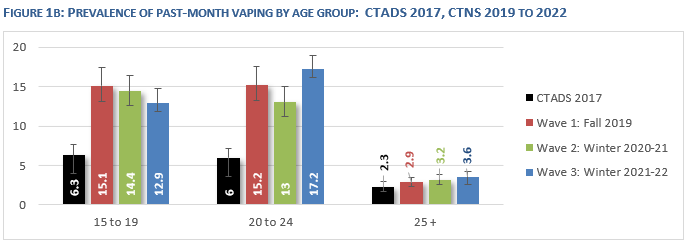

 * As reported here earlier, the marketing of flavoured vaping products is increasing. 

 Meanwhile, other governments have said "yes" to protecting youth from vaping flavours

In the 18 months that Health Canada has been "reviewing feedback" and "assess[ing] the impact" of measures to stop flavours from inducing children to try vaping, a number of other countries have adopted flavour restrictions. Restrictions are already in place in the Netherlands (January 2023), China (October 2022), Lithuania (July 2022), Denmark (April 2022), Hungary (May 2020), Estonia (July 2019) and Finland (2016). (See downloadable fact sheet). Although mired in legal challenges, the U.S. Food and Drug Administration has consistently ruled against the marketing of flavoured e-cigarettes, saying that their appeal to  youth makes doing so inappropriate for the protection of public health.

In addition to those countries which only allow tobacco-flavoured liquid, tehre are 30 or more countries which ban the sale of all e-cigarettes, including unflavoured or tobacco-flavoured liquids. Among these are the large nations of Mexico, Brazil, India, Turkey and Japan. 
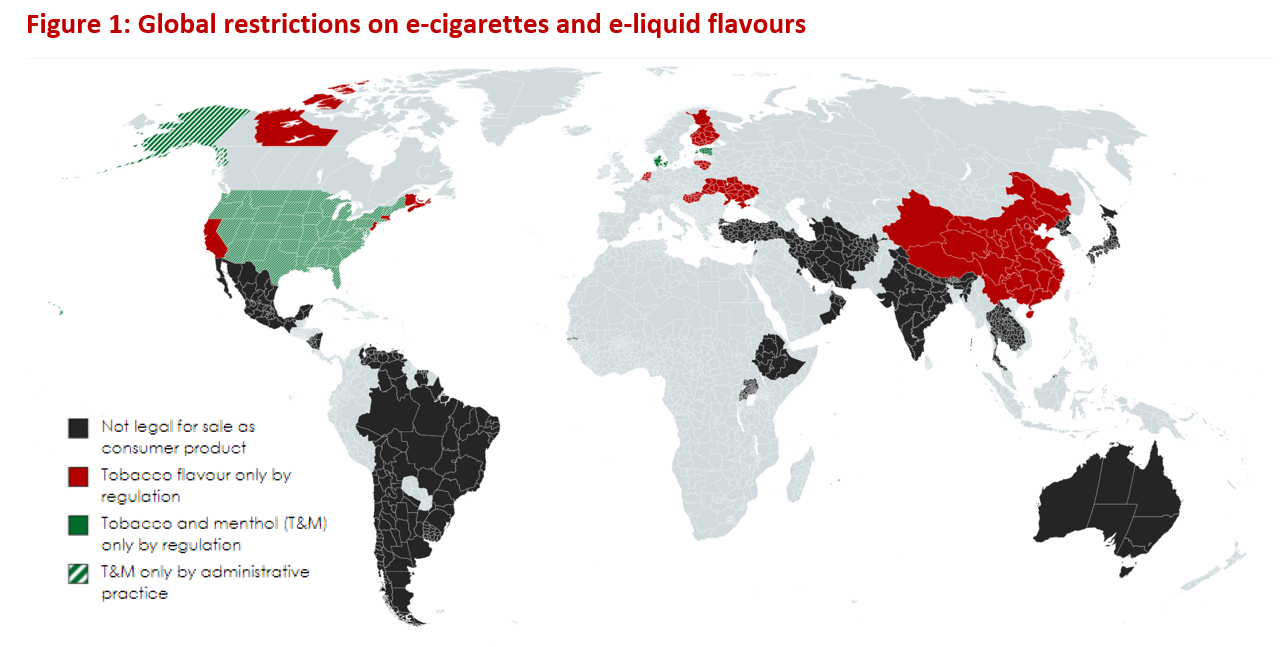


When federal governments are ineffective, sub-national governments have filled the gap. This is the situation in several U.S. states and in 4 Canadian provinces or territories: Northwest Territories (March 2022), New Brunswick  (September 2021), Prince Edward Island (March, 2021), and Nova Scotia (April 2020). The Quebec government is now reported to be preparing its own regulations to ban flavours.

Health leaders continue to call for a ban on nicotine liquid flavouring (other than tobacco).

All leading Canadian health organizations involved in tobacco control have called for an end to the sale of flavoured vaping liquids in the consumer goods market (i.e. vaping products which are neither authorized nor sold as smoking cessation products). Among many others, these include the Canadian Cancer Society, the Canadian Council of Chief Medical Officers of Health (CCMOH), the Canadian Dental Hygienists Association, the Canadian Lung Association/Canadian Thoracic Society, the Canadian Medical Association (CMA), the Canadian Paediatric Society (CPS), and Heart and Stoke.

The policy is also supported by international health bodies, including the major American and European Health Charities. The World Health Organization study group on tobacco product regulation has called for the flavour restrictions that are in place for tobacco to be extended to all nicotine products. (A sample of positions can be downloaded here).

Regulatory restrictions in other countries are helping protect youth. A just-published review of youth vaping in 75 countries that participate in the standardized Global Youth Tobacco Survey (which does not include Canada) found that in comparison with youth in countries without regulatory policies  "youth in countries with the most restrictive e-cigarette regulations ... had 0.6 times lower odds of being current e-cigarette users (aOR 0.6, 95% CI 0.6, 0.7)". 
 
Better alternatives than the status quo

It is possible that the decision against flavour  restrictions was made because federal officials believe both that e-cigarettes help smokers quit at the population level and also that flavourings are necessary for such a success.

No evidence has been offered by government to support this conclusion, other than a reference to a review of randomized clinical trials which excluded the results of population level studies. Such a position would be at odds with scientific reviews by many other health authorities, including the World Health Organization, the U.S. Surgeon General, and the College of Family Physicians of Canada. It would also appear to pre-empt a decision of the Canadian Task Force on Preventive Health Care which is expected later this year.

If the desire to provide smokers with access to flavoured liquids is the reason Health Canada has backtracked on its flavouring regulations, they could and should find other ways to protect young people from accessing these products. One obvious option is to restrict the supply of vaping products to the therapeutic channels in which there is oversight by health professionals. This could be done by requiring a prescription, as Australia does, or by selling vaping liquids without prescription in from 'behind the counter' in pharmacies.

The apparent demise of the flavour ban is a set-back, made worse by the lack of transparency about the reasons behind this policy reversal and the absence of discussion on alternative ways to protect youth.

Wednesday, 18 January 2023

National Non Smoking Week through the rear-view mirror

National Non-Smoking Week is 46 years old this month. This is an occasion to reflect on how much has - and has not - changed over the past half century. This post looks at parallels in government tobbacco policy in 1977 and 2023, and what lessons we might take from this history.

For many Canadians it was more than a lifetime ago that Health Minister Marc Lalonde designated a week in January 1977 as a time to focus on tobacco use. He said this was "part of the Department of National Health and Welfare's continuing campaign to make Canadians aware of the effects of tobacco smoke on smokers and non-smokers alike."  The objective of the week was to encourage smokers to quit and  "join the non-smoking majority". 


This year's message from the health ministry has a similar focus on individual behaviour change and the actions the government is taking to support smokers' quitting and to protect youth from starting.  As did their predecessor, the Hons. Jean-Yves Duclos and Carolyn Bennett framed the week as an "opportunity to educate people across Canada about the benefits of a smoke-free life." This year's message was virtually identical to the one issued a year earlier, with the notable addition of a tacked-on sentence designed to encourage smokers to switch to vaping products. 

Plus ça change ....

Much progress has been made to reduce smoking and the causes of smoking over these 5 decades. Cigarette smoking rates have fallen from 43% in 1977 to 12% in 2021. Smoke has largely been cleared from the spaces where Canadians work, play and live. Once-ubiquitous advertisements for cigarettes have disappeared from public view - even on cigarette packaging. In 1977, the government was against putting legislative controls on the market, but now they are firmly in place and are buttressed by provincial laws. Provincial government actions have put tobacco companies into bankruptcy protection. 

Indeed, Canada has done better at reducing cigarette smoking than most other countries. A review of the reduction in (age-adjusted) smoking rates between 1990 and 2019 put Canada in 9th place. 


...  plus c'est la même chose

There are, however, some striking parallels between the government's position on tobacco in 1977 and today. The first is a belief that new laws are not needed. The second is a belief that market forces can be leveraged to deliver harm reduction.

Although the term "harm reduction" is associated with this century, the idea of benefitting continuing drug users by reducing the risks of such behaviour is much older. Of the 5 main versions of Canada's tobacco control program, three have included a harm reduction component.


1970s - 1980s: Less Hazardous smoking. Health Canada's first efforts to reduce the harms of smoking involved encouraging smokers to leave longer butts and smoker fewer cigarettes. In the early 1970s the department seized on the idea of pressuing manufacturers to reduce the amount of tar in cigarettes. The "Less Hazardous Cigarette" program also involved supporting the development of new types of tobacco to decrease the amount of tar in comparison with nicotine. The department's interest in reducing tar was high: the 1977 tobacco policy included "reducing the hazard to smokers" as one of its 4 main goals. (The others were protection from second hand smoke, prevention of smoking initiation and support for cessation).

The federal government's actions to reduce the tar in cigarettes was examined in great detail during the Blais and Létourneau trials. Tobacco companies were successful in their attempts to use government policy as a defence for damage caused by misleading advertising of light cigarettes.
Justice Riordan described the government's view this way:  "the flow of evidence about Canada's approach to reducing the impact of smoking on Canadians' health in the 1970s and 1980s: 'If you can't quit smoking, then smoke lower tar cigarettes'.... Health Canada assumed that by increasing the amount of nicotine inhaled "per puff", smokers could satisfy their nicotine needs with less smoking. It saw this as a way of developing a 'less hazardous' cigarette, and even hoped to use the Companies' advertising as a means of promoting such products."  The judge observed that the federal government was "occupying the field with respect to information about reduced-delivery products". 

Health Canada's enthusiasm for "less hazardous smoking" did not last much longer than a decade. After a change in government, legislation became an option and a new strategy was developed to reflect this. The 1988 National Strategy to Reduce Tobacco Use (NSTRTU) was a consensus framework adopted also by provincial  governments and civil society organizations, and did not include a harm reduction component.  However, it was not until 2001 that the department formally abandoned support for 'light' cigarettes. (It also took decades for scientists to agree that the popular belief that light cigarettes were less harmful was not substantiated). 

2001-2006: Product Modification. The NSTRTU effectively died in 2001, when the federal government stepped away from a pan-Canadian approach and adopted its own  Federal Tobacco Control Strategy. Once again, the goal of reducing harm to continuing smokers was formally included in the department's four key objectives. The approach it proposed was product modification - and it committed to "explore ways to mandate changes to tobacco products to reduce hazards to health." When the strategy was tweaked in 2007, this component was dropped. 

2018: Vaping as reduced harm. In 2018, Health Canada adopted Canada's Tobacco Strategy,  This revision also included harm reduction, but this time it was characterized as switching to vaping products. 

Curiously, the federal approach to reducing harm is not extended to other products presented as 'reduced risk'. Heated tobacco products are given (mostly) equitable treatment as conventional cigarettes, and nicotine pouches are currently not permitted for sale in Canada. The department's rationale for encouraging the use of one product which has a different emissions profile and not doing so for others has not been made public.

Over the past 4 years, the public-facing elements of Canada's Tobacco Strategy have been quietly reworded: among other changes the term "harm reduction" has been replaced with "reduce the harms", but the general approach does not appear to have changed. In the departmental review of the file, released last month, the department identified that while no changes to the law are needed ("amendments at the level of the Act are not necessary at this time"), it did see the need to encourage smokers to see vaping as less harmful than smoking. ("Work could be undertaken to communicate the relative risk of smoking, in comparison to vaping, to people who smoke."). This departmental sentiment strongly echoes its 1970s approach.


The parallels between "less hazardous smoking" and "reduced harm from vaping".

Health Canada’s approach to reducing harms in 2022 parallels its view in 1977. In both decades the department has based its policy on a set of beliefs:
  • That products which emit fewer chemicals will cause less disease. 
  • That smokers will be willing to switch products to satisfy their nicotine addiction.
  • That market forces can be leveraged to encourage smokers to switch
  • That shifting smokers to newer types of products does not require additional regulatory constraints on pre-existing products 
  • That efforts to encourage the use of "less harmful" products will not cause collateral damage by drawing in more new nicotine users than would otherwise be the case.
The reality

Health Canada has faced a harsh reality check since allowing vaping products to be sold as consumer products in May 2018. It continues to struggle to "balance" the objectives of reduced harm to continuing nicotine users and protecting young people from nicotine use - but it has failed to satisfy either goal.

In the four years since the government legalized the vaping market there has been no evidence of a  reduction in the overall harms to Canadian smokers that can be attributed to vaping. Smoking rates have fallen -- but only because of an increase in never smokers. Vaping has not increased the number of former smokers (switchers). In the only studies which took a longitudinal approach for which results have been released, there has been no evidence that vapers were more likely to quit than smokers. Among the group of vapers followed for two years there was no overall decrease in smoking. 

On the other hand, there has been abundant evidence that the government misjudged the impact of its policy on young people. Decades' long progress against nicotine initiation has begun to reverse. 

The department responded to the dramatic increase in youth vaping by introducing several controls on the market - most of which were called for by health groups before the legislation was adopted. It has not yet, however, agreed to change the law to apply equivalent framework to vaping as exists for tobacco. 


These new measures have been slow to come on line. It has taken years rather than months to curb promotions and cap nicotine concentration. In June 2021, the government indicated that flavourings other than tobacco and mint-menthol would be banned in vaping products. 19 months later these regulations have not been finalized, no projected timeline has been provided and this restriction was not included in the regulatory commitments included in this week's message from the ministers. Other important controls on packaging and product design or better barriers to youth access and price promotions are not even on the federal agenda.

Can we hope that other parts of history will repeat?

To the benefit of Canadians, in the 1980s Health Canada eventually abandoned its hopes that lower tar cigarettes would save lives and that it could motivate companies to market their products in ways which reduced harm. Instead, in the mid 1980s, it worked towards increased regulatory controls on the market, collaboration with other levels of government, and the engagement of civil society. 

It did this by involving health stakeholders in the design of the National Strategy to Reduce Tobacco Use. The "Consultation, Planning and Implementation" committee was given the mission that foreshadows our modern goal of a Tobacco Endgame: "a generation of non-smokers by the year 2000."  

The NSTRTU ditched "less hazardous" but launched many new lines of action:   "Legislation, Access to Information, Availability of Services, Message Promotion, Support for Citizen Action, Intersectoral Policy Coordination, Research/Knowledge Development." Responsibility for these was to be shared with "comprehensive action by all groups concerned, using the various means available to them."

In its desire to leverage commercial activity to achieve tobacco harm reduction, Health Canada again finds itself without much support or engagement of other levels of government or civil society partners. As it did in the 1980s, it can overcome this isolation by supporting the development of a new national strategy.

Canada needs an approach to tobacco and nicotine which seeks to end nicotine addiction in a multi-product market, and which leverages the unique opportunities presented by a bankrupt tobacco industry. 

Sunday, 15 January 2023

Is the new federal vaping tax protecting kids? Price regulation would help.

This post looks at the initial impact of the federal vaping tax on the price of vaping liquids popular with young people in Canada and identifies reasons for governments to strengthen tax policies with price regulation.

BACKGROUND

The federal vaping tax was intended to protect youth

The federal government promised a tax on vaping products in the April 2021 budget with the stated purpose of reducing youth vaping: "Young Canadians' use of vaping products, such as e-cigarettes, is on the rise ... In addition to raising revenues, vaping taxation could become an effective means to help curtail harmful consumption of these products."

Budget 2021

Following a public consultation, legislation to implement the tax was included in the 2022 budget, and adopted in June 2022 before Parliament's summer recess. At the beginning of October 2022 manufacturers were required to start remitting the tax and on January 1, 2023 all vaping liquids sold must display a tax stamp.

The tax is higher for small quantities of nicotine and lower for larger quantities. This design puts a higher tax burden on the products that youth favour -- capsule products and disposables -- and a lower tax burden on bottled liquids. As Revenue Canada explains, the tax on liquids is:
  • $1 per 2 millilitres (mL), or fraction thereof, for the first 10 mL of vaping substance in the vaping device or immediate container
  • $1 per 10 mL, or fraction thereof, for amounts over the first 10 mL


A coordinated tax system is under discussion with the provinces

In the 2022 budget the federal government made public its invitation to “provincial and territorial counterparts to join a coordinated vaping taxation framework, under which an additional duty equal to the proposed federal rate would be applied. Total resulting revenues would be split between federal and provincial and territorial governments on a 50/50 basis.” 

Prior to this, some provincial governments had adopted their own vaping taxes:
  • British Columbia and Saskatchewan charge a higher rate sales tax on vaping products (20%) than on other consumer goods. 
  • Newfoundland and Labrador adds an additional 20% tax on vaping products. 
  • Nova Scotia applies a tax of $0.50/ml to liquids and a 20% tax on devices.  
New Brunswick, Prince Edward Island, Quebec and Alberta have indicated their interest in participating in a matching tax system with the federal government. Other provinces may also join, following the example of their coordinated tax approach to cannabis.

The government has announced its intention to review the public health impact of this tax

The 2022 federal budget also promise that "[T]he overall tax burden on vaping products will be regularly reviewed to ensure that important public health objectives are being met.” 

Saturday, 31 December 2022

The New Year and quitting smoking: what the data tell us.

For millenia the New Year has brought with it an expectation of personal improvement, and for many smokers that means trying (often again!) to quit smoking. This post looks at newly-available data from the Canadian Community Health Survey (CCHS) which sheds some light on the quitting behaviour of Canadian smokers. 

(The charts shown below and the data on which they are based can be downloaded here.)

One in seven Canadians who say they recently quit smoking report they did so in January.

Smokers appear more likely to quit in January than any other month. 

When gathering information for the Canadian Community Health Survey, Statistics Canada asks each participant about their smoking status. Those who say they are former smokers are asked how long ago they quit and those who say they have quit in the past year are then asked in which month that quit happened. 

The results of these questions over the past 7 cycles of this survey show a clear pattern: the month with the most reported quits is January (15% of quits). The months with the least reported quitting are the spring months of April to June, in which fewer than half as many successful quits are reported as in January.

Because the survey does not include questions about when non-successful quit attempts took place, it is not clear the  extent to which the cyclical pattern of successful quitting relates to differences in quit attempts, differences in success rates or just the timing of the interview. (Statistics Canada normally conducts the Canadian Community Health Survey throughout the year, with roughly even numbers of Canadians interviewed in each month.) Other information that is not provided in the survey is the month in which smokers start (or relapse): we know little about the seasonal patterns of smoking initiation and relapse behaviour.


The number of Canadians who quit smoking each year is equivalent to the population of Halifax.

Over the past 6 years, Statistics Canada has estimated that an average of 400,000 Canadians are former smokers who quit over the past 12 months.


But the number of Canadians who remain former smokers each year is only one-sixth as large (equivalent to the population of Prince George).

Over the last 6 years, the number of former smokers grew by only 400,000 (7.9 million in 2021, up from 7.5 million in 2023).  The average annual growth in the number of former smokers in that period is about 66,000 Canadians. 

The six-fold discrepancy between the number of new past-year quitters and the increase in the population of former smokers reflects a combination of factors, including  population changes (such as former smokers dying), and also the frequency with which past-year quitters / other former smokers resume smoking.

Quitting rates in Canada appear stable over time, but many fewer Canadian smokers are quitting.

Over the past two decades, the relationship of recent-quitters to remaining smokers has fluctuated from 8% to 11%. 

Half as many Canadians are identified as past-year quits in recent years as previously: from 680,000 in 2003 to 314,500 in 2021). This decline reflects a reduction in the number of smokers available to quit (6 million in 2003 compared with 3.8 million in 2021). 


Relative to the population, there are fewer former smokers now than 20 years ago.

Over the past two decades, the number of  former smokers has grown by 1 million - from 6.9 million in 2003 to 7.9 million in 2021. During the same period, however, the population of Canadians over 12 years of age grew by over 7 million (from 25.8 million to 32.5 million). 

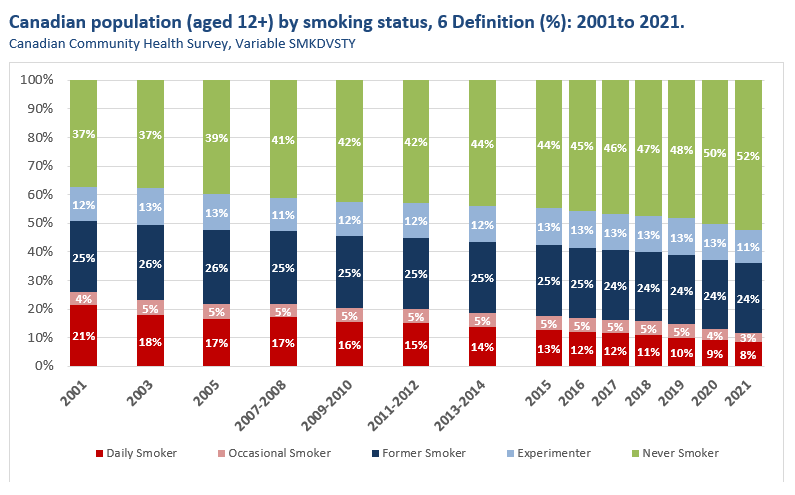
The proportion of Canadians who are former smokers has declined slightly - from 26% in 2003 to 24% in 2021. 


Smoking prevalence is falling mostly because more people are not starting smoking (and not because there are more former smokers).

Statistics Canada estimates that since 2015:
  • The number of current smokers fell by 1.5 million  and the prevalence of current smoking fell from 18% to 12% 
  • The number of former smokers increased by 399,000. The prevalence of former smokers in the population fell from 25% to 24%. 
  • The number of former “experimenters” (non-smoking Canadians who had smoked between 1 and 100 cigarettes) fell by 154,000. The prevalence of “experimenters” fell from 13% to 11%.
  • The number of never-smokers (people who had never smoked one whole cigarette) increased by 3.5 million. The prevalence of never smoking increased from 45% to 52%.


During this period, the number of Canadians aged 12 or over grew by 2 million people. If, in a counterfactual scenario, smoking behaviour had been stable during that period of population growth, there would now be:
  • almost 400,000 more smokers instead of a decline of 1.5 million
  • an increase in never smokers of only 1 million instead of the observed increase of 3.5 million
  • an increase in former smokers of 556,000 instead of the observed increase of only 399,000
  • an increase in experimenters of 288,000 instead of the observed decrease of 154,000.
From this counterfactual scenario we can conclude that the decline in smoking rates in Canada during involved 6 in 100 fewer Canadians smoking. This resulted from the net difference between 8 in 100 more Canadians never smoking and 2 in 100 fewer Canadians who had once smoked a cigarette no longer doing so.

The actual population change is shown in the waterfall graph below.


Are these estimates plausible? Where did the 1.2 million ever-smokers go?

The data outlined above suggest that between 2015 and 2021, the Canadian population lost 1.2 million people who had ever smoked a cigarette (From 16.7 million to 15.5 million). 

The number of deaths in Canada reported by Statistics Canada for the 7 year period 2015 to 2020 and for 2021 total 2 million. A contribution to the population loss of  1.2 million ever smokers would be the high ever smoking rates among the older Canadians who made up most of those deaths. The CCHS reported that in 2017-2018, three-quarters of Canadians then over 60 years of age had smoked at least one cigarette.


Tuesday, 6 December 2022

Tidbits from Health Canada's new Smoker and Vaper Panels

Over the last week, two major surveys on smoking and vaping commissioned by Health Canada were disclosed.  Both were conducted by Environics Research and managed under the framework of Government of Canada Public Opinion Research. Reports on these surveys are available from the Library of Canada at the following links:

Both panels were designed to permit "return-to-sample" (RTS) reviews in which the same individuals are asked in future years about changes to their and/or vaping behaviours.  

This is the second such RTS approach for vaping: the results of the panel in place between 2019 and 2021, reported here a year ago, found significant changes in vaping and smoking over the two year period. (Among the participants in this first panel, contrary to the results in the general public, smoking rates went up over the two years). The federal government currently has no longitudinal population surveys which include vaping or smoking behaviour. 

Between them, these two new Environics studies cost over $450,000 and involved the recruitment of 4,815 vapers (Canadians over aged 15 who had vaped at least once a week over the past month) and 7,248 smokers (Canadians over aged 15 who had used cigarettes in the past month). The recruitment was conducted to allow for additional young people and communities of concern (indigenous, visible minority, LGBTQ2+) Over half a million Canadians were invited to take the survey and the participation rate was 14% (vaping) and 13% (smoking). 

Both of the new survey reports (and the additional data on "banner tables") contribute to our collective understanding of the perspectives of individuals who use these products and are therefore worthy of a careful read by the tobacco control community. 

This post identifies some of the unique or surprising findings in these reviews. Environics' summaries from both reports are pasted at the bottom of this post. 

1) Most smokers -- and especially young smokers -- do not find smoking unaffordable.

Smokers were asked "how affordable are the cigarettes you buy?" Only 1 in 5 Canadians said that cigarettes were unaffordable, and one-third reported they were affordable. As expected, smokers who lived in provinces where taxes are higher were more likely to report that cigarettes were unaffordable, as were smokers who had a smaller family income. 


Large differences were seen in the perception of affordability by age. Only 1 in 10 teenage smokers and 1 in 5 young adults found cigarettes were unaffordable - compared with 2 in 5 adults . 


2) One-third of young vapers and former smokers say that throughout the day they vape "continuously" 

There are large differences in the frequency with which vapers report they use their devices. The highest frequency of use is reported by two mostly exclusive groups: teenagers and former smokers.


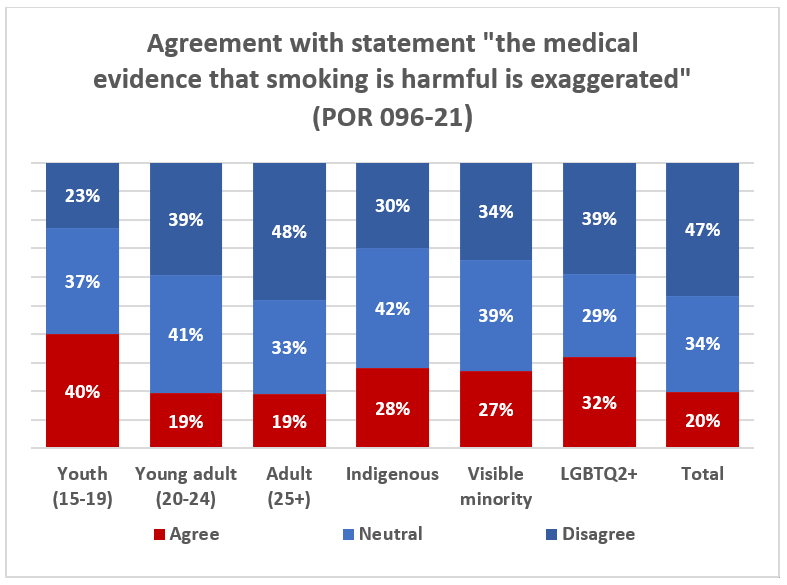
3) Many young smokers think that the dangers of tobacco are exaggerated.

Two in five teenage smokers agree with the statement "the medical evidence that smoking is harmful is exaggerated".  Among the general smoker population, one in five shares this view, but about half say that the dangers are not exaggerated.

Beliefs among Indigenous smokers are also different than the general population, with more than one-quarter (28%) saying that the dangers are exaggerated, and fewer than one-third (30%) say they are not. A similar pattern was found with other equity groups identified in this survey. 


4) Smokers and vapers report similar patterns of first nicotine dose of the day.

For the most part, similar proportions of smokers and vapers say they use nicotine within 5 minutes of waking (the survey acknowledges that many smokers are vapers, but does not provide information on how soon after waking a cigarette OR a vaping product is used).  Almost half of teenagers who smoke or vape do so within 30 minutes of waking. 

Surprisingly, perhaps, no vapers identified "addiction" as one of the three main reasons they vape (QC2). 


5) Dual users vape to overcome smoking restrictions on average more than 7 times a day.

Over half of the vapers in this panel also use cigarettes (58%), with fewer than 1 in 5 being people who have transitioned from smoking to vaping (former smokers = 18%). One quarter (24%) have never been regular smokers, including the almost 1 in 5 (18%) who have never smoked a whole cigarette.

Dual users smoke an average of 8 cigarettes per day -- almost all of which they identify as using to overcome barriers to smoking. 


6) Vapers who have quit smoking are LESS LIKELY to say they have received advice from vape stores or health professionals.  

Vapers who had previously smoked or who continue to smoke were asked with whom they had spoken about using vaping to quit or reduce cigarette use (results shown below).  Those who had successfully quit smoking were more likely to report they had spoken with no one than were those who continued tdo smoke (37% vs 16%), and were less likely to report they had talked with vape store staff (20% vs 34%) or health care professionals (16% vs 29%). The most commonly reported discussions on vaping to quit were from friends and family. 

A similar question was asked of those on the smoker panel who also vaped. Those results are shown on page 41 of Environic's smoker panel report. 


7) One quarter of those who currently smoke have formerly made a "successful" quit attempt.

Among the Smokers' Panel, one-quarter (25%) had previously quit for more than six months: 18% of smokers had quit for more than one year before relapsing, and 7% had quit for six months to one year. Six months is the benchmark for a successful quit used in many studies on efficacy of stop-smoking approaches, and one-year is often used to define long-term quitter.


8) When dependency is assessed on the same basis for vaping and tobacco, "high dependency" is more often observed for vaping.

Environics used the "Heavy Smoking Index" parameters to assess how many Canadian smokers in their panel had moderate or high dependence on smoking. The index assigns a score based on how many cigaretets were smoked each day and how soon after waking the first cigarette was consumed. These researchers established a Heaviness of Vaping Index, which similarly identified high dependence for those who vaped with nicotine more than 21 times per day and within 5 minutes or waking, or 31 or more vapes a day and vaped within 30 minutes of waking.

Under their parameters, vapers were  more likely to be defined as having high dependence. 


Implications for public health

Health Canada continues to heavily fund and to rely on consumer research studies to inform its approach to tobacco and vaping. As reported  here earlier, these reports are available to the public. 

Nonetheless, this data on the Canadian experience with and use of nicotine products has not been translated into publications in peer-reviewed journals, and it remains on the 'grey literature' shelf. This hinders translating the Canadian experience into more generalizable conclusions, through systematic reviews or other knowledge development activities. A system to translate these reports into scientific publications could increase their value and use. 

A limitation of the "panel" approach is that it is a closed system -- looking only at the behaviour of the individuals initially selected. The first Environics vaping panel, for example, identified how many vapers moved from vaping to dual use or being nicotine-free, but was not structured to include those who moved from smoking to vaping. Half of the vapers included in the second vaping panel started vaping regularly over the past two years -- at least one year after the first panel was struck. 

Even with the new two-panel approach, the behaviour and beliefs of those who return to smoking or vaping (relapse) or who start smoking or vaping (initiation) will not be assessed. If the panel system proves effective, there may be some use in extending it to monitor behaviour changes among former smoker/vapers and never smoker/vapers too.

Monday, 28 November 2022

A new global treaty on plastics -- and why it is important for tobacco regulation

Earlier this year, the United Nations Environmental Programme (UNEP) began the process to develop a global treaty on plastics. This week formal negotiations are underway in Punta del Este (Uruguay). This post provides background to this meeting and what it could contribute to reducing tobacco use in Canada.

A framework convention on plastics

The first session of the International Negotiating Committee is focused on laying the ground work for the treaty, using procedures agreed to this past summer. These sessions are being closely observed by industry, NGOs and researchers, whose participation in the event included a structured interaction with delegates which took place this weekend.

Three dozen countries have grouped themselves in the High Ambition Coalition to End Plastic Pollution of which Canada is a founding member. The stated vision of this group of nations is to end plastic pollution by 2040. Among their deliverable goals is the elimination of problematic plastics, including by bans and restrictions. As of thsi date, however, none of these countries includes cigarette filters in their restrictions on single-use plastics.

The treaty that emerges from these negotiations could end the human and environmental damage caused by cigarette filters. Or it might not. The difference may well come down to the extent that the tobacco industry is allowed to influence decision-making at the treaty and the extent to which governments like Canada's work to stop that happening. Notably, Canada has not yet responded to calls to protect this process from tobacco industry interference.


Photo courtesy of ASH.org

Canada has recently accelerated efforts to reduce plastic pollution ...

Federal efforts to address plastic pollution have accelerated in recent years and in June federal regulations to ban six single use plastics were finalized. By the end of next year, plastic checkout bags, cutlery, foodservice ware, stir sticks and most straws will no longer be permitted for sale in Canada. (The government is also developing recycled content regulations and rules for recycling and composting.)

... but has not yet developed a plan to address plastic waste from tobacco products

Cigarette filters were exempted from Canada's federal bans on single-use plastics, even though the federal government had been advised to include them by Parliamentarians, the Zero Waste Coalition, environmental organizations and the public. In the background statement to the regulations, the government acknowledged that cigarette filters were a problem, that they were among the top 10 most commonly littered items in Canada, and that two-thirds of Canadians polled thought they should be included in a plastics ban. Decisions on cigarettes were postponee: "Currently, cigarette filters are being assessed by the Department to determine whether they are plastic pollutants of concern, and the result of this assessment could be reflected in future Government action."

There are 21 billion reasons for Canada to ban cigarette filters in order to protect the environment...

Most cigarettes are made with acetate (plastic) filters, which are non-biodegradable. The microplastics and tobacco-toxins which leach into the environment from discarded cigarette filters are harmful to plants and aquatic animals.

The United Nations Environment Programme estimates that world-wide, cigarette filters result in 766.6 million kilograms of toxic trash each year. This will include the portion of the 21 billion cigarettes smoked in Canada last year that were tossed away instead of being disposed of safely. Municipal litter audits and shore-line cleanups continue to report cigarette butts are a leading source of discarded waste.

The recent marketing of inexpensive cartridge-based and disposable electronic cigarettes has added to the complexity and burden of tobacco industry waste. (With toxic liquids and lithium batteries, this toxic e-waste is another pressing challenge.).

... and to reduce the harm to individual smokers and to public health

Cigarette filters were introduced by the tobacco industry as a harm-reduction product, and the "less harmful" messaging was heavily promoted. One legacy of these campaigns is that many consumers and regulators wrongly continue to think that filters offer some health benefit.

In fact, as the World Health Organization confirms "despite tobacco industry marketing, there is no evidence that filters have any proven health benefits.”

Instead, filters add to the harms of combustible cigarettes. Because they make cigarettes more attractive and diminish concerns about the health consequences of smoking, filters help the tobacco industry recruit and addict new customers. Because the ventilation holes in them facilitate deep inhalation, they increase the risk of one type of lung cancer (adenocarcinoma).

No country has yet implemented an fully effective strategy to address tobacco and vaping waste...

In recent years Canada and countries in Europe have advanced restrictions on the use of single-use plastics. In addition to prohibiting certain items, these policies also require manufacturers to accept the financial or physical responsibility to dispose of waste (Extended Producer Responsibility, EPR).

A very few countries have imposed specific measures to address cigarette waste. Examples of these include mandatory labelling of cigarettes as acontaining plastic (in all EU countries), requiring cigarette manufacturers to pay for waste management (France), and a municipal levy on retailers to recover abatement costs (San Francisco). France's experience in applying EPR to cigarette waste exposed a vulnerability of this approach, as the industry used its "responsibility" for the solution as a lever to influence public and regulator attitudes to tobacco use.

Other measures to address cigarette waste have been proposed but not yet implemented. These include bans on filters or requirements for biodegradable filters, deposit-return systems and greater deterrence for littering.

Some jurisdictions have taken action to address waste from vaping products. California supports public education efforts and the United States Environmental Protection Agency categorizes them as toxic waste. Caledonia bans disposable e-cigarettes, as other governments are considering doing. The French Senate recently proposed a surtax on disposable e-cigarettes of €6 per ml of liquid.

Tobacco companies use greenwashing to avoid meaningful change

Knowing that a filter ban will cause fewer people to start smoking and will help smokers stop, the tobacco industry will encourage governments to adopt less powerful measures to address plastic filter waste. They want the issue to be seen as the result of consumer behaviour, not product design.

Around the world, tobacco companies are using greenwashing public relations campaigns to achieve this.

In Canada, they provide environmental groups with small amounts of money to mobilize volunteers to clean cigarette butts from beaches and other environmentally sensitive areas. These efforts portray smokers as the villains, clean-up crews as the heroes and the industry on the side of the heroes.

Another industry PR effort for false solutions is the encouragement and support for the installation of public ashtrays, and promoting the unrealistic view that filters can be recycled.

The "Sustainability Report" issued this August by Rothmans, Benson and Hedges (the Canadian subsidiary of Philip Morris International) exposes the cynical use of these campaigns.

  • The company provided a total of $75,000 (one twelve-thousandth of its annual net income of $900,000,000)
  • 600,000 volunteers were engaged in clean up (one for every 7 Canadian smokers).
  • These volunteers collected three-quarters of a million cigarette butts (one for every 27,000 cigarettes sold in Canada, or one for every 9,000 cigarettes manufactured by Rothmans, Benson and Hedges.)
In short, for less than the salary of a sales person, the company was able to engage volunteer work by more than a half million Canadians to clean up its garbage. Even then, only a slight fraction of cigarette waste was recovered.

 
France's experience in applying EPR to cigarette waste exposed a vulnerability of this approach, as the industry used its "responsibility" for the solution as a lever to influence public and regulator attitudes to tobacco use.

There is an emerging consensus that a ban on cigarette filters is needed.

Although decades have passed since concerns about the health harm of filters were raised, health authorities have generally avoided developing regulations in this area of cigarette design (other than recommending controls on filter ventilation).

Growing concerns about the environmental impact have recently strengthened the call for an end to the use of filters altogether. This year the World Health Organization set the environment as the theme for World No Tobacco Day. In doing so, it called on governments to “treat cigarette filters the same as any other single-use plastic, and consider banning them, to protect public health and the environment."

Banning cigarette filters was a policy recommendation already supported by a number of Canadian organizations and individuals, including Greenpeace Canada, 15,600 Canadian petitioners, Surfrider, the House of Commons Standing Committee on Environment and Sustainable Development and theNational Zero Waste Council.

From a series of interviews with members of the tobacco control community in Canada, it appears that banning cigarette filters is considered the best option -- but that getting this accomplished will require thought and resources.


FCTC Article 5.3 is a key issue for negotiations in the plastics treaty.

An important rule for the negotiation process will be measures to prevent the tobacco industry from influencing governments.

This may involve a shift in thinking for some delegations. Policy development in the environmental sector often involves multi-party consultations, with business and civil society given equal voice. There is no strong equivalent to FCTC Article 5.3, where there is understood to be a "fundamental and irreconcilable" conflict of interest between the commercial interests of tobacco companies and public health.

Tobacco control interests will be represented at the Plastics Treaty negotiations by the Stop Tobacco Pollution Alliance. You can follow the negotiations through a blog posted by one of the founders of this alliance, the US group ASH.ORG.

And you can show your support by joining this group.


More information:


World Health Organization

2022 report "Poisoning our Planet"

Environment and Climate Change Canada

Plastic waste and pollution reduction

NGO positions

Stop Tobacco Pollution Alliance: Key Messages: Tobacco Control in Plastics Policies
Stop Tobacco Pollution Alliance: Plastics Treaty Process and National Policies: A Backgrounder
Stop Tobacco Pollution Alliance: Tobacco in Plastics Policies Tobacco in Plastics Policies
Take Action
Global Center for Good Governance in Tobacco Control, Tobacco's Toxic Plastics: A Global Outlook
ASH Scotland Briefing - E-cigarette waste; Disposables, a new problem


Tuesday, 22 November 2022

The updated Cochrane review of e-cigarettes -- and what it should mean for Canada.

Last week, the UK based health charity, Cochrane, released its sixth report on the evidence on the use of e-cigarettes for smoking cessation. 

This post reflects on how this and other Cochrane conclusions could serve Canadian efforts to reduce smoking at the population and individual levels. In brief:
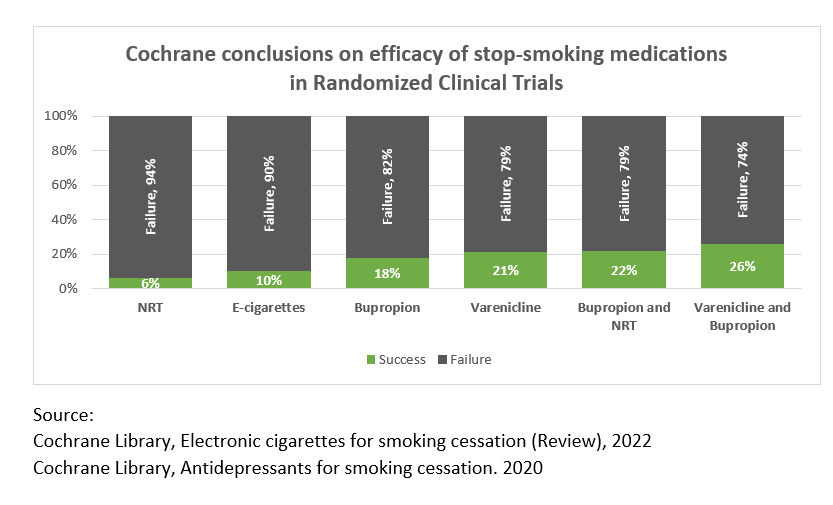
  • Cochrane establishes that in clinical trials, E-cigarettes fail 10 times more often than they succeed (roughly the same as NRT). Other reviews have shown that in real life they are even less successful.
  • The products used in the studies reviewed by Cochrane are different than those on the market in Canada. The U.S. Surgeon General recommends that because of the wide variation in products and usage it is not prudent to draw generalized conclusions about their efficacy as stop-smoking medications
  • Cochrane reviews show that other stop-smoking medications do better in clinical trials. (The ones that, unlike e-cigarettes, have been assessed and authorized on the basis of their safety, efficacy and quality.)
  • Any advice to a smoker to use e-cigarettes to quit smoking (or to reduce the harms from continued nicotine use) should be tailored to individual circumstances and be individually delivered in a therapeutic context. Population-level encouragements for smokers to use e-cigarettes are imprudent. To date these have back-fired in Canada, resulting in more new nicotine addicts than former smokers. 

Next version, much the same as the first...

The Cochrane review on e-cigarettes that was published last week has the same central messages as the versions published in September 2021, the one published in April 2021, and the one published in October 2020. A major difference with earlier versions is the number of studies they accepted for their analysis: three that compared NRT to e-cigarettes were included in 2020, four in 2021 and six this year.

This study was released with considerable fanfare and extensive public relations efforts. Cochrane publishes several reports on tobacco issues (described at the end of this post) - few seem to get the same PR effort. 

The press releases that accompanied the release of the report were clearly designed to encourage e-cigarette use by smokers. The lead author's statement suggested  that e-cigarettes were a highly effective stop smoking medication: "For the first time, this has given us high-certainty evidence that e-cigarettes are even more effective at helping people to quit smoking than traditional nicotine replacement therapies, like patches or gums."

Another PR effort was a linked and coordinated release sent by other British enthusiasts. Professor John Britton was one endorser, and unequivocally presented e-cigarettes as a panacea for smoking cessation: "All smokers should therefore try vaping as a means to end their dependency on smoking tobacco."   (The release made no mention that Dr. Britton has been engaged by  Canadian commercial vaping interests to oppose flavour restrictions in New Brunswick. )

There are many reasons to disagree with these views.

Cochrane has confirmed that in clinical trials, e-cigarettes are NOT very effective at helping smokers quit.

The reviewers memorably present their conclusions in a plain language summary: "For every 100 people using nicotine e‐cigarettes to stop smoking, 9 to 14 might successfully stop, compared with only 6 of 100 people using nicotine‐replacement therapy, 7 of 100 using e‐cigarettes without nicotine, or 4 of 100 people having no support or behavioural support only."

Rather than confirm the superiority of e-cigarettes, these numbers confirm the inadequacy of both vaping products and NRT - even under the best of supervised therapeutic circumstances. 

The Cochrane report on e-cigarettes concluded in effect that 90 of 100 smokers who use e-cigarettes to quit smoking will be smoking again within 6 months, compared with 94 failures for every 100 who use NRT. 

The relative risk for success between E-cigarettes and NRT is 1.63 (10 vs 6 successes per 100 tries). The relative risk for failure between NRT and E-cigarettes is 1.04 (94 vs 90 failures per 100 tries) 

(Simon Chapman provides a good discussion of the high rate of failure in his blog "Would you take a drug that failed with 90% of users? New Cochrane data on vaping “success”)

Cochrane has confirmed that in clinical trials, other stop-smoking medications available in Canada do better than e-cigarettes.

Other Cochrane reviews have assessed the effectiveness of pharmacotherapies for smoking cessation. These include the stop-smoking medications that have been approved by Health Canada following a review of their safety, efficacy and quality. (The safety, efficacy and quality of e-cigarettes is not examined by Health Canada before they are permitted for sale).

Among these medications are prescription medications Varenicline and Bupropion. These drugs do not replace nicotine from tobacco, but instead help the smoker end nicotine addiction by altering the brain's response to it. Varenicline reduces nicotine withdrawal symptoms and diminishes the rewarding effects of cigarettes. Through a different mechanism, Bupropion also decreases nicotine withdrawal symptoms and may diminish the rewarding effects of cigarettes. Other over-the-counter stop-smoking medications authorized for sale  include the natural health product Cytisine and the prescription anti-depressant Nortriptyline.

A 2020 review by Cochrane looked at the effectiveness of some pharmacotherapies, using similar analytic methods to thsoe used in the review on e-cigarettes. This review pharmacotherapies concluded that for every 100 people who tried to quit smoking:

  • 17 to 20 were successful at quitting for at least 6 months if they used Bupropion alone (80 to 83 failed). 
  • 17 to 28 were successful if they used Bupropion and NRT (72 to 83 failed). 
  • 21 were successful if they used Varenicline alone (79 failed). 
  • 20 to 33 were successful if they used Varenicline and Bupropion (67 to 80 failed).


Randomized Clinical Trials are designed for therapeutic medication and are not the right yardstick to assess consumer product use.

In developing its assessment of the effectiveness of e-cigarettes as cessation devices, the Cochrane reviewers considered only clinical trials that used randomized control trials (RCT). This may be the gold standard for assessing medications before granting licensing approval, but it does not reflect the reality of most smokers' quit attempts. 

In RCT's, smokers are engaged and participating in a therapeutic cessation attempt, often using a specified e-cigarette product. In the real world, most try to quit without any external structure or support and use a variety of products. 


This Cochrane review is out of step with other scientific assessments of the usefulness of e-cigarettes as quitting aids.

The Cochrane reviewers are only one of several research groups conducting systematic reviews of e-cigarettes efficacy for smoking cessation. Even among reviews that, like Cochrane, considered only Randomized Control Trials, other scientists have concluded that even on the narrow question of whether e-cigarettes are superior to NRTs, the evidence is not there. 

Reviewers of RCT's on e-cigarettes who came to different conclusions include:

  • An Australian review of RCT's found limited evidence that in the clinical setting freebase nicotine e-cigarettes are efficacious as an aid to smoking, and that they double the likelihood of relapse to resuming smoking, strong evidence that e-cigarettes increase combustible smoking uptake in non-smokers, and insufficient evidence that nicotine e-cigarettes are efficacious outside the clinical setting. (Banks et al, 2022)
  • An Irish review of RCT's found "no clear evidence of a difference of effect" between e-cigarettes and NRT. (Quigley et al. 2021)
  • A review for the US Preventive Services Task Force found "inconsistent" results in RCT's and did not conclude that e-cigarettes were effective as a therapeutic product for smoking cessation. (Patnode et al, 2021)
  • The U.S. Surgeon General found that there was too much variation in the products sold and the way they were used to make generalizations about whether or not they were effective for smoking cessation. (U.S. Surgeon General, 2020).
Reviewers who considered both RCTs and longitudinal or observational studies have found no benefit to quitting with e-cigarettes.
  • Swedish review of RCT's and longitudinal studies found no net benefit to the use of e-cigarettes for quitting smoking was found. (Hedman et al, 2021)
  • American researchers looking at RCT's and observational studies found that although e-cigarettes were found to be effective when used as therapeutic interventions in clinical settings, this was not the case when they were sold as consumer products in the general population. (Wang et al, 2021). 
  • Analysis of American smokers over time found no evidence that higher nicotine e-cigarettes (or lower nicotine cigarettes) improved successful quitting or prevented relapse (Chen et al, 2022)
  • Another study using the same longitudinal study found that dual users were less likely to quit. (Osibogun et al, 2022)
  • * A study conducted by Environics for Health Canada, which followed vapers over a two-year period finding no net reduction in smoking (Environics POR 113-20) 
Outside of the United Kingdom, very few medical bodies recommend e-cigarettes for smoking cessation. Those which advise doctors to refrain from recommending e-cigarettes to smokers include the College of Family Physicians of Canada and U.S. Preventive Services Task Force.  Leading Canadian smoking cessation  specialists Peter Selby and Laurie Zawertailo published a Clinical Practice review on Tobacco Addiction in the New England Journal of Medicine this summer, concluding that even though nicotine e-cigarettes may be more effective than nicotine-replacement therapy "We would recommend against the use of e-cigarettes for smoking cessation given insufficient evidence to support their use."


This Cochrane review did not address the non-clinical (public health) consequences of e-cigarette use

There are a number of aspects of e-cigarette use that were not included in the Cochrane assessment, and harms which were not accepted as "adverse consequences". These include:

  • the increased health risks incurred by smokers who try e-cigarettes, but continue to smoke (dual users), thereby inhaling the different harmful chemicals in each type of product. 
  • the increased health risks incurred by smokers who successfully quit with e-cigarettes, but who continue to use them. (The Hajek research found that those who successfully quit using NRT are half as likely to continue using nicotine as those who used e-cigarettes).
  • the initiation into nicotine use by young people who are influenced by messaging that encourages e-cigarette use.
  • the role of the tobacco industry in designing and supplying both cigarettes and e-cigarettes, and the commercial pressure that encourages them to market these in ways which maintain sales.
In the full (pay-walled) version of their report, the reviewers acknowledge this limitation of their study: "Reviews of ECs for policymaking are often broader in scope than our review, which focuses exclusively on their role in supporting smoking cessation in people who smoke. Outside of smoking cessation, there remain unanswered questions about the impact of EC availability and use on young people; we will be evaluating this in a separate review."

There is no evidence that encouraging smokers to use e-cigarettes has benefitted health in Canada.

The federal policy decision in 2016 to liberalize the sale of vaping products as consumer goods remains controversial. Four years have passed since this policy became law with the 2018 Tobacco and Vaping Products Act)

The impact of this policy change is reflected in federal surveys, which show that the uptake of these products was largely among young people, and not among adult smokers.


Although smoking rates continue to decline, Federal surveys show that this is chiefly due to the growing population of never smokers, and that the quitting rates in Canada have not increased since e-cigarettes were legalized.

Currently in Canada, two-thirds of e-cigarette users either continue to smoke cigarettes (36%) or have never smoked (33%).